A Conservative Guide to Email Subject Line Testing
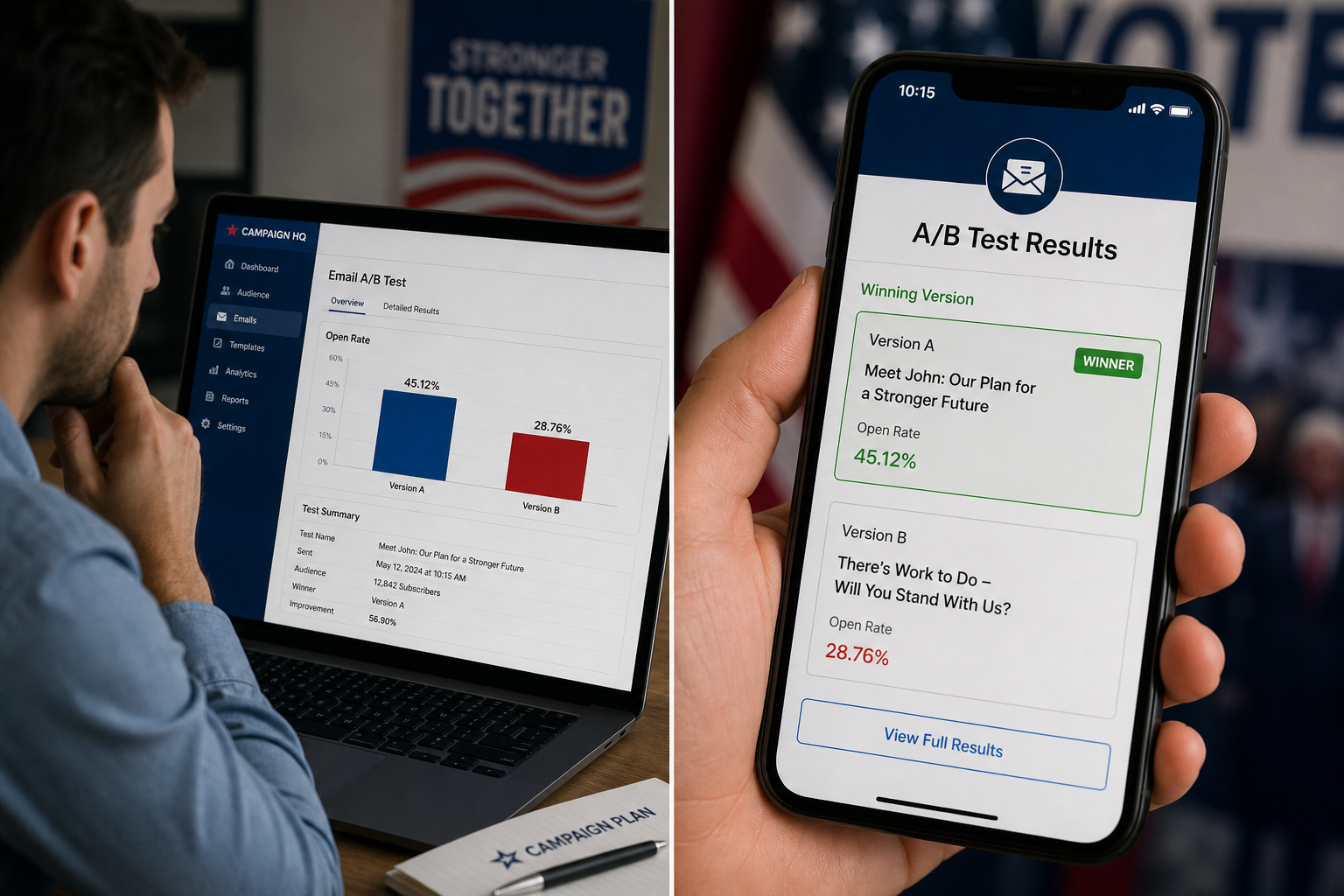
The Most Important Line in Your Campaign Email
In political campaigns, every dollar and every minute counts. We build sophisticated voter models, craft detailed policy papers, and spend countless hours on grassroots outreach. Yet, the success of our digital fundraising and mobilization efforts often hinges on a few dozen characters: the email subject line. This single line of text is the gatekeeper to our message. Get it right, and you unlock engagement, donations, and support. Get it wrong, and your carefully crafted message languishes, unopened, in a crowded inbox.
For conservative campaigns, which often contend with a hostile media landscape, direct-to-voter communication via email is not just a tactic; it’s a lifeline. It’s an owned channel where we control the narrative. Wasting this opportunity with uninspired or ineffective subject lines is a form of digital malpractice. The solution is not guesswork or relying on what “feels” right. The solution is methodical, data-driven A/B testing.
Why A/B Testing is a Non-Negotiable Discipline
A/B testing, or split testing, is the process of comparing two versions of a single variable to determine which one performs better. For email subject lines, this means sending one subject line to a small portion of your list and a second, different subject line to another small portion. The version that achieves a higher open rate is then sent to the remainder of your list. This isn't just a marketing gimmick; it's an exercise in fiscal conservatism and strategic efficiency.
Consider the compounding effect over a campaign cycle. Improving your average open rate by just 2-3% on a list of 100,000 supporters means thousands of additional people see your message with every send. Over months, this translates to significantly more donations, volunteer sign-ups, and event attendees—all without spending an extra dime on list acquisition. It is the most direct way to maximize the return on investment from the audience you’ve already built.
Key Subject Line Variables to Test
Effective testing requires a disciplined approach focused on a single, clear hypothesis. Avoid changing multiple elements at once; otherwise, you’ll never know what truly drove the results. Here are the most critical variables your campaign should be testing regularly:
1. Length and Formatting
With a significant portion of emails now opened on mobile devices, subject line length is critical. Test a short, punchy subject line (under 40 characters) against a longer, more descriptive one. Mobile email clients often truncate long subjects, so front-loading your key message is essential.
- Test A: Urgent: Deadline Approaching
- Test B: We Need Your Help to Reach Our End-of-Quarter Goal Tonight
2. Tone and Emotion
The tone of your subject line sets the expectation for the content inside. Test different emotional appeals to see what resonates with your list.
- Urgency: "Matching gift expires at midnight"
- Inspiration: "A new vision for our state"
- Curiosity/Intrigue: "What the media isn't telling you"
- Negative Framing: "Their latest attack on our values"
3. Personalization
Using a recipient's first name in the subject line is a common tactic, but its effectiveness can vary. Test its impact against a non-personalized version. More advanced campaigns can test geographic personalization ("A message for voters in [City]") or personalization based on past actions ("Thanks for your past support, [Name]").
4. Questions vs. Statements
Posing a question can create an open loop in the reader's mind, compelling them to click to find the answer. Test a direct question against a declarative statement.
- Test A: Are you with us?
- Test B: We need you with us.
5. Use of Punctuation and Emojis
While they should be used sparingly to maintain a professional tone, emojis can help a subject line stand out in a cluttered inbox. Test a subject line with a relevant emoji (e.g., a flag 🇺🇸, a calendar 🗓️) against a plain-text version. Similarly, test the impact of ellipses (...) or question marks.
A Practical Framework for A/B Testing
To implement a successful testing program, follow a consistent methodology:
- Form a Hypothesis: Start with a clear question. For example: "I believe a subject line that asks a question will generate a higher open rate than a statement for our mobilization emails."
- Isolate One Variable: Ensure the only difference between your A and B versions is the element you are testing. Everything else—the sender name, the preview text, the email content—must remain identical.
- Determine Your Sample Size: A common practice is to test on 20% of your target list (10% for Version A, 10% for Version B). This segment must be large enough to yield statistically significant results. Most modern email service providers have built-in A/B testing tools that handle this automatically.
- Define the Winning Metric: For subject lines, the primary metric is almost always the unique open rate. The tool will measure which version receives more opens after a set period (e.g., 2-4 hours).
- Deploy the Winner: Once a winner is determined, the email platform automatically sends that version to the remaining 80% of your list.
- Document Everything: Keep a simple spreadsheet tracking the date, the hypothesis, the subject lines tested, the results, and any key takeaways. This creates an institutional knowledge base that becomes more valuable with every test.
From Guesswork to a Winning Strategy
In a political environment where every advantage matters, relying on intuition for your email strategy is a luxury no campaign can afford. A disciplined approach to A/B testing transforms your email program from a guessing game into a data-driven engine for engagement and fundraising.
By constantly testing, learning, and optimizing, you show respect for your supporters' attention and your donors' resources. You ensure that your vital messages are not just sent but are actually seen. In the battle for the inbox, the campaign that tests intelligently is the campaign that wins.