AI Ad Production Is Here. Campaigns Still Need to Use It Responsibly
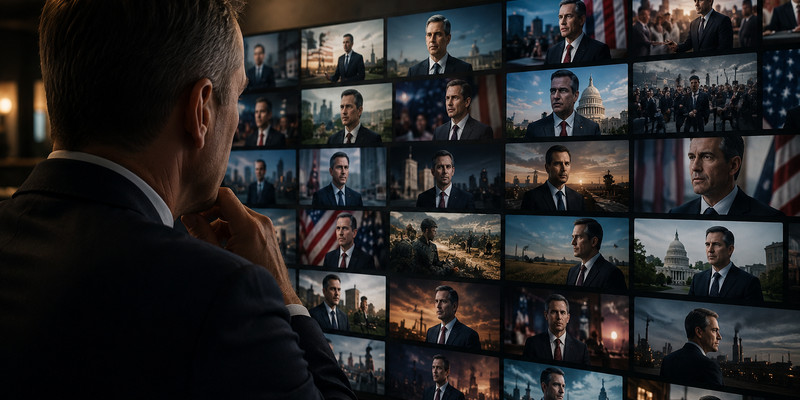
The debate over whether AI belongs in political advertising is over. It's already there.
In the 2026 midterm cycle, AI-generated content has shown up in races from school board campaigns to governor's contests — used to sharpen attacks, dramatize policy contrasts, and produce TV-quality creative at a fraction of the traditional cost. The technology is no longer theoretical. It is operational. And the campaigns that understand both what it can do and where it can go wrong will have a meaningful edge over those still figuring out whether to adopt it.
What AI Has Actually Changed
The most significant impact of AI on political ad production is not the quality of the output — it's the compression of the timeline.
Campaigns & Elections notes that 2026 is the first cycle where AI-powered TV ad production is available at scale — with AI compressing production timelines from weeks to hours, meaning a campaign that previously built two or three hero spots for an entire cycle can now generate dozens of variants quickly and without a large production team. The traditional production timeline for a political TV ad — agency hire, concept development, shoot, edit, approval, air — ran four to six weeks minimum and cost between $15,000 and $50,000. AI tools have collapsed that to hours or days at a fraction of the price, putting broadcast-quality creative within reach of state legislative races, county campaigns, and local contests that were previously priced out of the medium entirely.
The speed advantage extends beyond production. A message tied to a breaking issue no longer has to wait weeks for a production company to turn around a new spot. By that point, the moment has passed. AI gives campaigns the ability to respond to a news development, an opponent gaffe, or a policy shift with new creative on the same day — a capability that did not exist for most of the history of political television advertising.
How Widespread It Already Is
The 2026 Texas primaries were the clearest preview of what AI-generated political creative looks like in practice.
NBC News reported that at least 15 campaign ads featuring AI-generated content ran between November 2025 and March 2026 alone — across races from school board contests to gubernatorial primaries, with AI used to enhance speech, depict politicians as cartoon characters, and in one case mimic a rival candidate's voice in a radio ad without a clear disclosure. That figure represents only the documented cases. The actual volume of AI-assisted creative in 2026 is significantly higher, with most production-side AI use — script generation, voiceover synthesis, image enhancement, rapid variant creation — happening below the threshold of public reporting.
MNTN's analysis of AI-generated commercial production found that 83% of ad executives now deploy AI in the creative process, up from 60% just two years ago — a rate of adoption that confirms AI is no longer a competitive differentiator in production but a baseline expectation for campaigns operating at any meaningful scale.
Where It Goes Wrong
The efficiency gains are real. So is the risk.
Three pre-registered studies involving over 7,600 American respondents, published in the peer-reviewed Political Communication journal, found that while people generally dislike AI in campaigns, they are especially critical of deceptive uses — which they perceive as clear norm violations. Critically, the research found that deceptive AI use does not significantly damage the offending campaign's favorability in the short term, but it does increase public support for stricter regulation and outright bans on AI in political advertising — a finding that suggests campaigns using AI deceptively may not pay an immediate price, but are contributing to a regulatory environment that will constrain how the entire industry operates going forward.
The disclosure landscape is already shifting in response. Meta now requires disclosure when AI was used to create or alter political ads in certain cases. Washington, California, Colorado, and a growing list of states are enforcing transparency requirements that go beyond federal standards. There is currently no federal regulation constraining AI in political messaging — but the patchwork of state laws is expanding, and campaigns running ads across state lines face compliance complexity that is only going to increase.
The Strategic Distinction That Matters
The campaigns getting the most out of AI creative in 2026 are using it as a production tool, not a deception tool. That distinction matters both ethically and strategically.
AI is genuinely valuable for:
- Producing multiple message variants quickly to test what resonates before committing to broad distribution
- Responding rapidly to news cycles with updated creative that would otherwise require weeks of production time
- Creating platform-adapted versions of core messages — 30-second anchor spots, 15-second digital cuts, six-second bumpers — without rebuilding from scratch each time
- Stretching production budgets for down-ballot campaigns that previously had no path to broadcast-quality creative
It becomes a liability when used to fabricate statements, synthesize a rival's voice or likeness, or produce content designed to mislead voters about real events. Beyond the ethical problems, Basis Technologies explicitly flags in its 2026 cycle guidance that misinformation and disinformation will be more sophisticated this cycle — and that campaigns need rapid response strategies and strong brand safety controls, not just platform trust. The reputational exposure from AI-generated content that goes wrong travels at the same speed as the content itself.
What Campaigns Should Be Building Now
The campaigns that will benefit most from AI creative in 2026 are the ones that treat compliance and creative as the same problem from the outset — not separate workflows.
That means building disclosure practices into the production process before a single ad goes to air, understanding which platforms require what disclosures and how those requirements differ by state, and using AI's speed advantage to test and refine legitimate messaging rather than to manufacture content that couldn't withstand scrutiny.
The technology is not going away. The campaigns that use it well will move faster, spend less on production, and maintain the creative volume that modern political advertising demands. The ones that use it irresponsibly will find themselves navigating a regulatory and reputational environment they helped create.