Winning with Digital Out-of-Home Advertising
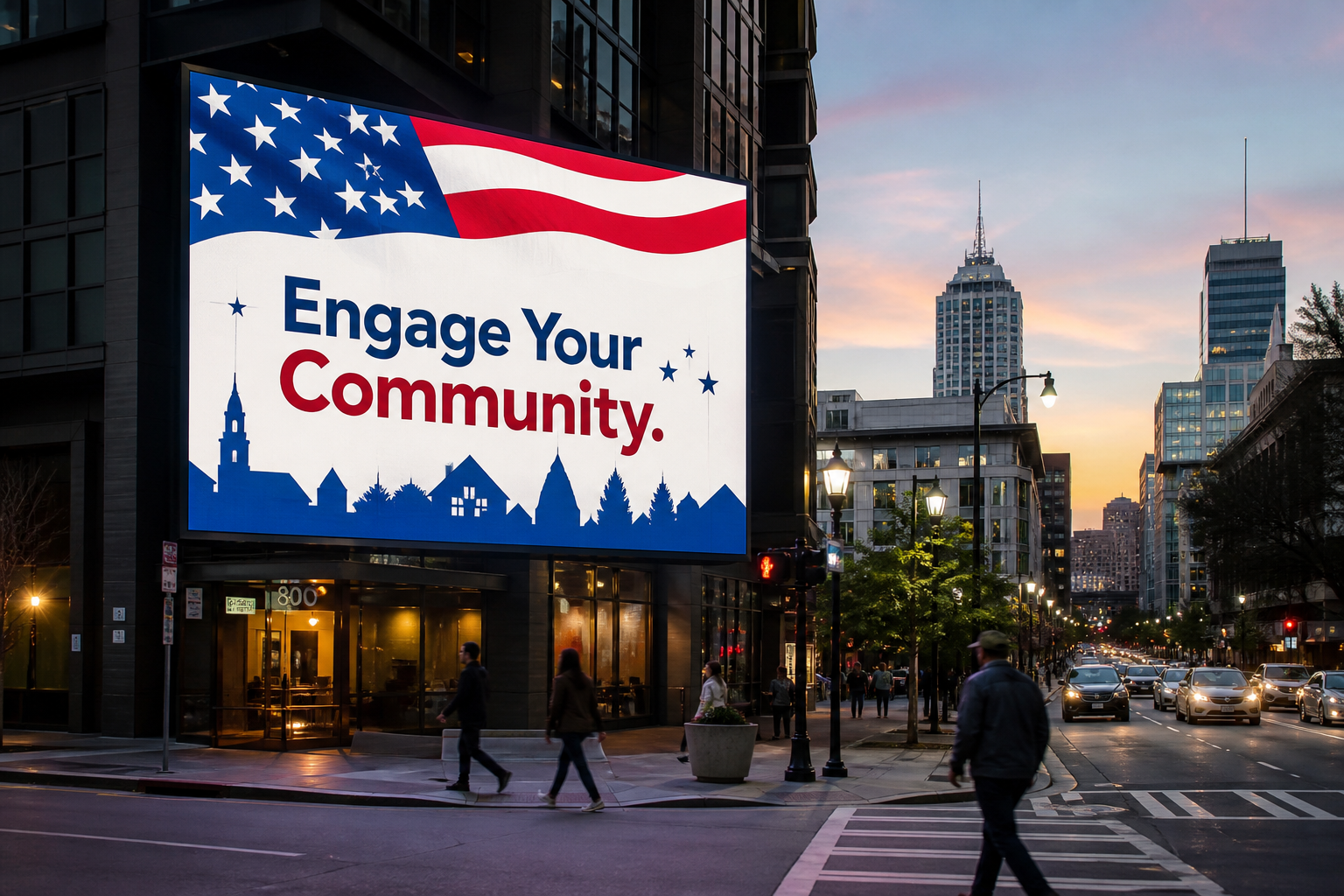
The Shifting Landscape of Political Advertising
In a digital age dominated by saturated social media feeds and mounting concerns over online censorship, political campaigns are rediscovering the power of reaching voters in the physical world. While traditional outreach remains vital, a modern, data-driven channel is proving uniquely effective: digital out-of-home (DOOH) advertising. This technology merges the high-impact presence of traditional billboards with the precision of digital marketing, offering a powerful tool for campaigns looking to cut through the noise and deliver their message with authority.
What is Digital Out-of-Home (DOOH)?
Digital out-of-home refers to any digitally powered advertising screen found in public spaces. This includes more than just the massive digital billboards overlooking highways. DOOH encompasses a network of screens in diverse locations, such as:
- Elevators and office building lobbies
- Gas station pumps and convenience stores
- Airports, bus shelters, and train stations
- Gyms, bars, and shopping malls
- Rideshare vehicles (Uber/Lyft)
Unlike static billboards, DOOH ads are dynamic. Content can be changed in real-time, scheduled for specific times of day, and targeted to locations with surgical precision. According to reports from market intelligence firms like Insider Intelligence, DOOH advertising spending in the U.S. is projected to continue its strong growth trajectory, underscoring its increasing role in the modern media mix.
The Strategic Advantage for Conservative Campaigns
For conservative campaigns often navigating a hostile online environment, DOOH provides a crucial alternative channel to communicate directly with voters. The advantages are both practical and philosophical.
1. Bypass Big Tech Censorship and Ad Fatigue
Conservative voices frequently face suppression or algorithmic disadvantage on major social media platforms. DOOH exists outside this ecosystem, providing a broadcast medium that cannot be easily de-platformed or shadow-banned. Furthermore, as consumers become increasingly adept at ignoring or blocking online ads, the unskippable nature of a large public screen commands attention and breaks through digital ad fatigue.
2. Precision Geo-Targeting with Real-World Impact
Modern DOOH platforms allow for sophisticated, programmatic ad buying. A campaign can use data to display ads in specific zip codes, congressional districts, or even individual neighborhoods. This enables hyper-local messaging, such as promoting a town hall event only within a five-mile radius or running get-out-the-vote (GOTV) reminders near key polling precincts on Election Day. This tactic combines the broad visibility of outdoor advertising with the targeting capabilities of a digital campaign.
3. Project Authority and Build Trust
There is a perceived legitimacy that comes with advertising in the physical world. A bold, professional presence on a digital billboard projects stability and seriousness, which can be a powerful antidote to the often chaotic and trivial nature of online discourse. For voters weary of digital noise, a clear, concise message in their community can build name recognition and foster a sense of trust and inevitability around a candidate or cause.
Best Practices for Implementing DOOH in a Campaign
Effectively leveraging DOOH requires a strategic approach that goes beyond simply putting a digital poster in a public place. To maximize return on investment, campaigns should follow these best practices.
Keep the Creative Bold and Simple
Viewers often have only a few seconds to absorb a DOOH message, especially on roadways. The creative must be uncluttered and instantly understandable. Focus on a high-quality candidate photo, a short and memorable tagline (five to seven words is ideal), and the campaign's website URL. The goal is recall and reinforcement, not complex policy explanations.
Integrate DOOH with Your Overall Digital Strategy
DOOH should not operate in a silo. Use it as a top-of-funnel tool to drive awareness, then reinforce the message through other channels. For example, a campaign can run a DOOH ad in a target district and simultaneously launch geo-fenced mobile ads to the same area. This multi-channel exposure significantly increases message retention. Some platforms allow for QR codes, which can drive direct traffic, but they should be used only where viewers have time to scan safely.
Leverage Context and Timing
Programmatic DOOH allows campaigns to be contextually relevant. A message about economic policy could run on screens near business centers during commute hours, while a message about community values could be displayed near churches and community centers over the weekend. This ability to tailor messaging to the time, place, and likely mindset of the audience is a key advantage over static media.
Measure for Impact, Not Just Clicks
Measuring the direct impact of DOOH can seem challenging, but it's not impossible. Instead of looking for direct click-throughs, track metrics like lift in website traffic from the targeted geographic areas, increases in local campaign searches (brand lift), and mentions on social media. This data provides a clear picture of how offline visibility is driving online engagement.
A Modern Strategy for Timeless Connection
In a political environment where winning requires a multifaceted approach, digital out-of-home advertising offers a unique bridge between the digital and physical worlds. It provides conservative campaigns a durable, censorship-resistant platform to build name recognition, project strength, and deliver targeted messages to voters in their own communities. By integrating DOOH into a broader communication strategy, campaigns can ensure their message is not only seen and heard online but also felt as a real and tangible presence in the daily lives of voters.