How Programmatic Ads Give Conservatives a Strategic Edge
The New Frontier of Political Outreach
In a fragmented media landscape where voters are bombarded with competing messages, traditional advertising is losing its impact. Simply buying ad space on a major news website or running a television spot no longer guarantees you’re reaching the right audience. Programmatic advertising has emerged as a powerful solution, using data and automation to place digital ads with surgical precision. For conservative campaigns navigating a frequently hostile media environment, this technology isn’t just an efficiency tool—it’s a strategic imperative for message control and voter mobilization.
Programmatic advertising is the automated buying and selling of digital advertising space in real-time. Instead of negotiating with individual publishers, campaigns use sophisticated platforms to bid on ad impressions targeted at specific user profiles. According to industry reports on political ad spending, digital advertising now accounts for billions in campaign expenditures each cycle, with a significant and growing portion executed through programmatic channels. This shift allows campaigns to move from buying broad website audiences to buying direct access to individual voters, wherever they browse online.
The Strategic Advantages for Conservative Campaigns
For campaigns committed to constitutional values and fiscal responsibility, programmatic advertising offers unique advantages that align with a disciplined, data-driven approach.
1. Bypassing Traditional Media Gatekeepers
One of the greatest challenges for conservative candidates is earning fair coverage from mainstream media outlets. Programmatic advertising allows campaigns to circumvent this filter entirely. By delivering messages directly to voters on the websites, apps, and streaming services they already use, you control the narrative. This direct line of communication is essential for defining your platform, responding to attacks, and ensuring your core constituencies hear from you without distortion.
2. Unmatched Targeting and Personalization
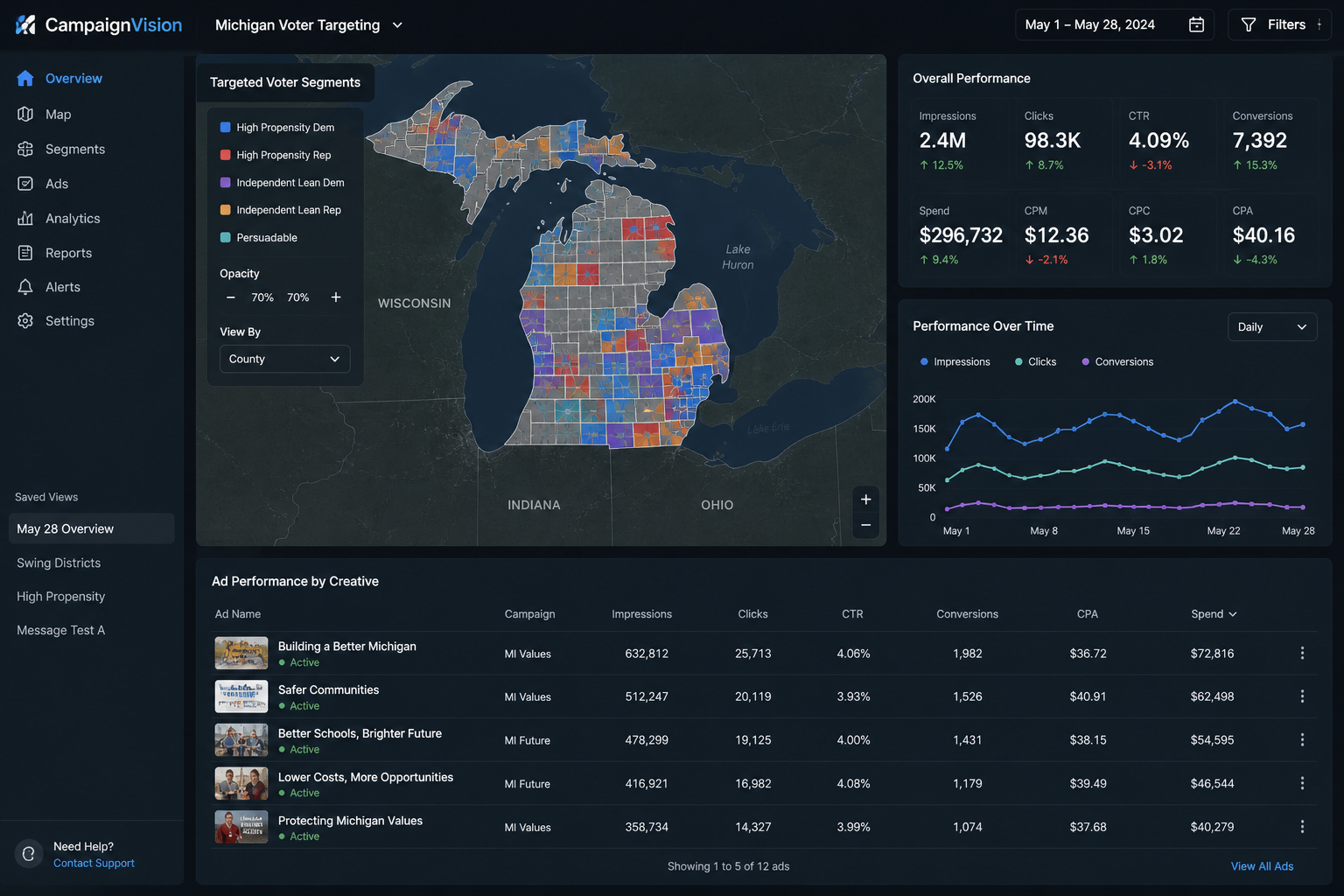
Effective political communication is about delivering the right message to the right person at the right time. Programmatic platforms leverage anonymized data from voter files, consumer databases, and online behavior to build precise audience segments. This enables campaigns to run multiple ad variations simultaneously, tailored to specific voter groups. For example:
- An ad focused on economic policy can be served to small business owners in a key suburban county.
- A message about school choice can be targeted to parents who have shown interest in education-related content.
- A get-out-the-vote (GOTV) reminder can be delivered to registered supporters in the 72 hours before an election.
This level of granularity ensures that ad spending is not wasted on irrelevant audiences, maximizing the impact of every dollar.
3. Efficiency, Scale, and Real-Time Optimization
Unlike traditional media buys with long lead times and fixed costs, programmatic campaigns are agile. The automated bidding process ensures you pay a competitive price for each ad impression. More importantly, performance is tracked in real-time. Campaign managers can see which messages, creative formats, and audience segments are performing best and reallocate the budget accordingly on the fly. This data-feedback loop allows for continuous improvement, stretching campaign funds further and driving better results.
Key Campaign Applications from Primaries to Election Day
Programmatic advertising is a versatile tool that can be deployed across the entire campaign lifecycle.
- Persuasion: During the crucial middle phase of a campaign, programmatic is ideal for reaching undecided voters in swing districts. By identifying these audiences through data modeling, campaigns can serve them a steady stream of content highlighting the candidate's policy strengths and vision.
- Fundraising: Campaigns can use programmatic to target past donors or build “lookalike” audiences of individuals with similar profiles to their most generous supporters. These targeted appeals are far more effective than broad-based email blasts.
- Get-Out-the-Vote (GOTV): In the final push, geofencing and voter file matching allow campaigns to serve hyper-local ad reminders to registered supporters, boosting turnout when it matters most.
- Rapid Response: When a false attack ad airs, a programmatic campaign can be launched within hours to counter the narrative, targeting the same geographic and demographic audiences who saw the initial attack.
Best Practices for a Winning Programmatic Strategy
While the technology is powerful, its success depends on sound strategy and execution. Campaigns must prioritize several key areas:
Data Integrity and Privacy: Voter trust is paramount. Ensure all data is sourced ethically and used in compliance with privacy regulations. Transparency about data practices builds credibility and respects the values of your constituents.
Brand Safety: Programmatic buys can place ads across millions of websites. It is critical to use blacklists and whitelists to prevent your campaign’s ads from appearing alongside inappropriate or off-brand content. Work with reputable platforms that offer robust brand safety controls.
Compelling Creative: The most sophisticated targeting in the world cannot save a weak message. Invest in high-quality video, display, and audio creative that is clear, persuasive, and emotionally resonant. The ad itself must do the work once it reaches the target.
Moving Forward with Data-Driven Outreach
In today's complex media environment, conservative campaigns cannot afford to rely on outdated advertising methods. Programmatic advertising provides the precision, efficiency, and control needed to compete and win. By embracing this technology and integrating it into a broader digital strategy, campaigns can cut through the noise, build direct relationships with voters, and ensure their message of freedom and prosperity is heard loud and clear.