From Mass Emails to Meaningful Messages: Smarter Personalization for Political Campaigns
The End of the One-Size-Fits-All Email
In political marketing, the generic email blast is a relic. Voters are inundated with digital noise, and campaigns that fail to deliver relevant, personal communication are destined for the spam folder. Simply inserting a supporter’s first name into a subject line—once a novel tactic—is now table stakes. True personalization goes deeper. It involves leveraging voter data to segment audiences and deliver tailored messages that resonate with individual interests, build authentic relationships, and drive meaningful action. For conservative campaigns seeking to mobilize a dedicated base and bypass legacy media filters, mastering this strategy isn't just an advantage; it's a necessity.
The Foundation: From Data Collection to Strategic Segmentation
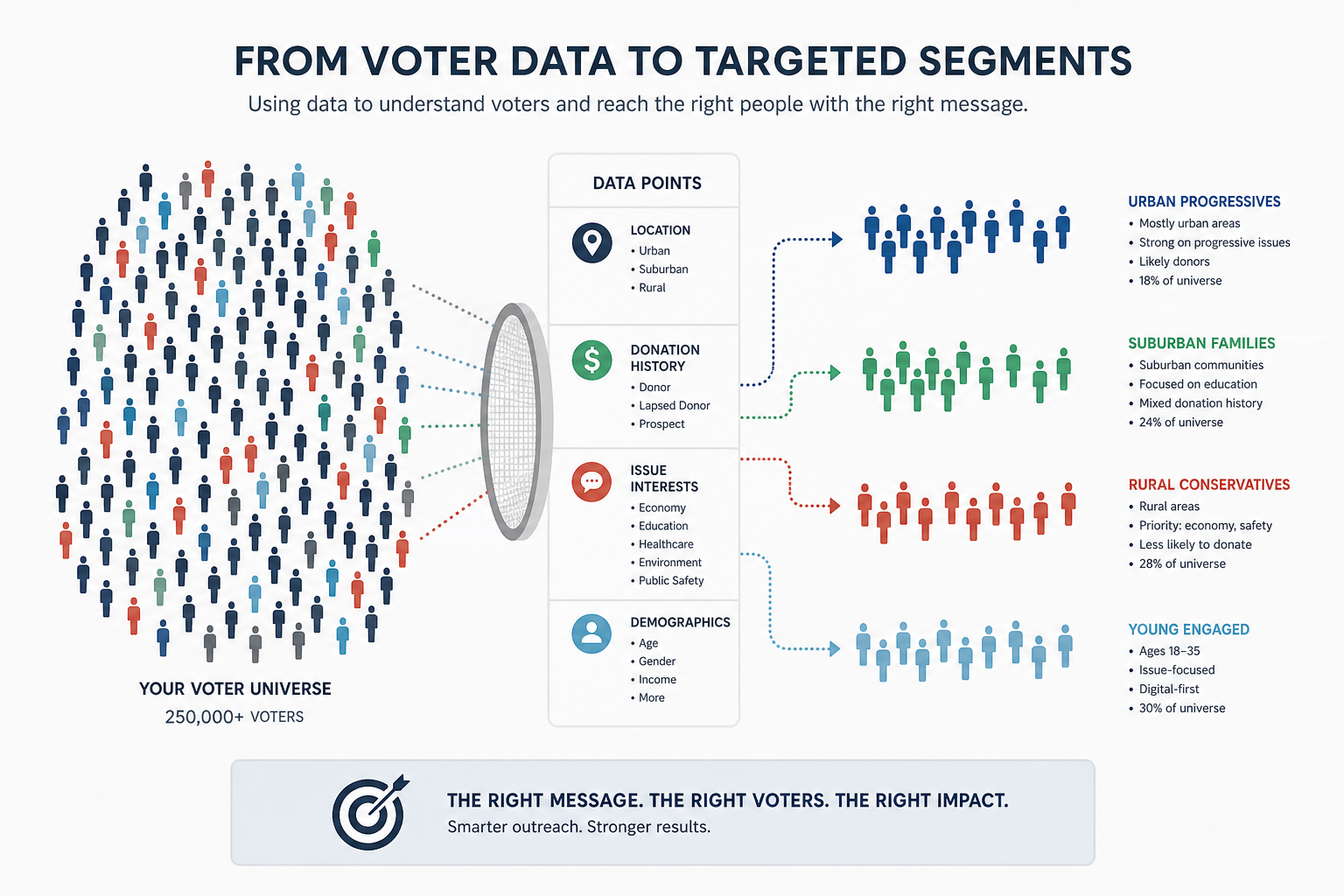
Effective personalization begins not with the email editor, but with a disciplined approach to data. Every interaction a supporter has with your campaign is a data point that can inform your communication strategy. The goal is to move beyond a single, monolithic email list and create a series of well-defined segments based on who your supporters are and how they behave.
Key Data Sources for Segmentation:
- Entry Points: How did they join your list? Was it a petition on border security, a sign-up form at a rally, or a lead ad focused on economic policy? Their entry point is a powerful indicator of their primary concerns.
- Engagement History: Track who opens your emails, who clicks on links, and which links they click. A supporter who consistently clicks on fundraising appeals is different from one who only engages with policy updates.
- Donation Behavior: Your most critical segments include first-time donors, recurring donors, high-dollar donors, and lapsed donors. Each requires a distinct messaging approach to maximize their support.
- Geographic Data: Segmenting by state, congressional district, or even city is essential for get-out-the-vote (GOTV) efforts, event promotion, and messages about local issues.
According to data from email marketing service Mailchimp, segmented campaigns result in significantly higher engagement. Their research has shown that segmented email campaigns can have open rates over 14% higher and click-through rates over 100% higher than non-segmented campaigns. This data underscores a fundamental truth: relevance drives results.
Implementing Advanced Personalization Tactics
Once your data is organized into meaningful segments, you can deploy more sophisticated tactics that make each supporter feel seen and valued.
1. Dynamic Content
Dynamic content allows you to display different text, images, or calls-to-action within a single email based on the recipient's segment. For example, a single fundraising email could feature:
- A personalized ask for past donors: “Jane, you’ve been a key supporter since the primary. Can you increase your impact with a contribution of $50 today?”
- A different ask for non-donors: “Mark, we’re facing a critical deadline. Can you make your first-ever contribution of $25 to help us fight back?”
- A unique paragraph for voters in a specific state: An email sent to a national list could include a P.S. specifically for Texas subscribers about an upcoming rally in Dallas.
This approach makes the message feel highly specific to the recipient's relationship with the campaign, dramatically increasing its effectiveness.
2. Behavioral Triggers and Automation
Automated email series triggered by a supporter's actions can deepen engagement without manual effort. Key examples include:
- Welcome Series: When a new supporter signs up, don't just send a single confirmation. Send a 3-5 part series introducing the candidate, outlining core principles, and making the first, gentle fundraising ask.
- Donation Page Abandonment: If a supporter clicks your donation link and navigates to the page but doesn’t complete the transaction, a triggered email sent an hour later asking if they had trouble can recover a significant percentage of those contributions.
- Re-engagement Campaigns: For subscribers who haven't opened an email in 90 days, send a targeted message with a compelling subject line like, “Are we still on the same team?” to either win them back or clean your list of unengaged contacts.
The Conservative Advantage: Building a Resilient Base
For conservative campaigns, sophisticated personalization is more than just good marketing; it's a strategic imperative. It allows us to build direct, trusted relationships with voters, ensuring our message is heard without the distortion of a hostile corporate media. By speaking to supporters about the specific issues they have signaled are important—whether it’s the Second Amendment, fiscal responsibility, or parental rights—we reinforce the idea that the campaign is listening.
This level of personalization fosters a loyal, motivated grassroots army. When supporters feel they are part of a movement that understands their values and concerns, they are more likely to donate, volunteer, and, most importantly, vote. It transforms a passive email list into an active community of advocates.
Executing a Smart, Trust-Based Strategy
To implement personalization effectively, campaigns must prioritize trust and transparency. Start with simple segments, like donors versus non-donors, and A/B test your messaging to see what resonates. Ensure your data is clean and your automations are working correctly to avoid embarrassing errors. Finally, always be a good steward of supporter data. Personalization should feel helpful and relevant, not intrusive. By grounding our digital strategy in respect for the individual, we not only win engagement—we build the lasting trust required to win elections.