Hyper-Localized Strategy Is Replacing Broad Digital Targeting
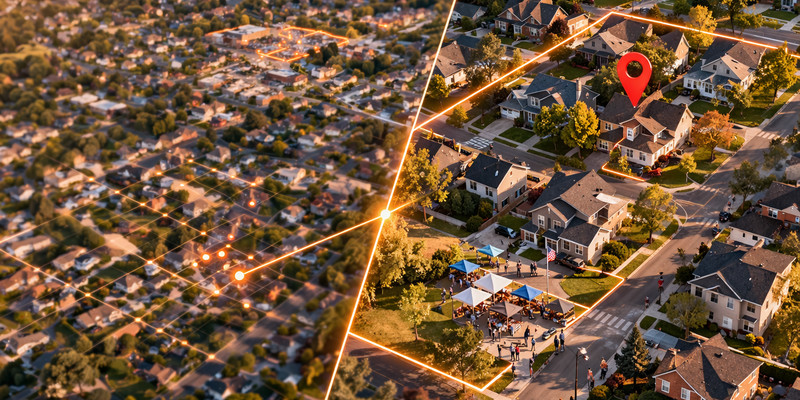
National messaging may define a campaign’s brand, but elections are won precinct by precinct. As digital advertising has matured, broad demographic targeting is giving way to hyper-local strategy—precision outreach tailored not just to voter segments, but to neighborhoods, blocks, and even specific event zones.
Campaigns that understand local nuance outperform those that rely on generic scale.
Moving Beyond Zip Codes
For years, campaigns targeted voters by district, zip code, or county. While that remains useful, it lacks granularity. Hyper-local targeting refines geographic strategy down to micro-clusters—specific neighborhoods where turnout patterns, issue priorities, and persuasion probabilities vary significantly.
Geolocation tools allow campaigns to overlay voter file data with consumer behavior, past turnout patterns, and local issue engagement. A suburban subdivision may respond strongly to school board messaging, while an adjacent neighborhood prioritizes small business concerns.
Treating those areas identically wastes opportunity.
Hyper-local strategy acknowledges that political persuasion is contextual.
Geo-Fencing and Event-Based Targeting
One of the most powerful tools in localized strategy is geo-fencing. Campaigns can draw digital boundaries around specific locations—community events, college campuses, union halls, or local festivals—and deliver tailored digital ads to devices within those zones.
This approach reinforces real-world presence. A voter attending a town festival might later receive messaging tied to local economic development. Someone near a university campus may see outreach focused on student loan reform or job opportunities.
The integration of physical location and digital reinforcement increases message relevance.
Hyper-local campaigns are not louder. They are more aligned.
Real-Time Adjustment
Localized digital targeting also benefits from real-time analytics. If engagement spikes in one neighborhood following a mail drop or canvassing push, digital ads can reinforce that momentum. If turnout models indicate lagging early vote participation in a precinct, campaigns can deploy targeted reminders immediately.
This dynamic responsiveness transforms campaign planning from static scheduling to adaptive execution.
Rather than planning media weeks in advance and hoping for impact, campaigns can monitor performance daily and reallocate budget toward high-opportunity zones.
Margins shift at the micro level.
Cost Efficiency Through Precision
Digital advertising budgets are finite. Broad audience targeting often dilutes effectiveness by reaching low-probability voters. Hyper-local targeting concentrates resources where persuasion or mobilization likelihood is highest.
Instead of spending evenly across an entire district, campaigns can weight investment toward high-density persuadable clusters. Over time, small improvements in conversion rates compound into meaningful gains.
Precision becomes fiscal discipline.
Aligning Messaging With Community Identity
Hyper-local strategy is not only about geography. It is about identity.
Neighborhoods develop distinct cultural and economic characteristics. Messaging that resonates in a rural farming community may fall flat in a suburban commuter hub. Localized creative—imagery, language, policy framing—signals attentiveness.
When voters see messaging that reflects their lived experience, credibility increases.
Campaigns that localize respectfully avoid appearing detached or generic. They demonstrate awareness of community realities.
Ethical Considerations
As with all advanced targeting, hyper-local strategy requires guardrails. Campaigns must respect data privacy, comply with platform policies, and avoid manipulative practices.
Transparency about digital outreach builds trust. Precision should enhance relevance—not undermine fairness.
Responsible hyper-local targeting strengthens civic engagement by ensuring voters receive information aligned with their interests and location.
The Competitive Future
Political campaigns are entering an era where broad digital saturation is no longer sufficient. Voters are inundated with content. Attention is scarce. Relevance determines impact.
Hyper-local strategy aligns message, geography, and timing. It integrates field operations with digital reinforcement. It converts neighborhood insights into measurable performance gains.
The campaigns that dominate future cycles will not rely solely on district-wide persuasion universes. They will operate block by block, event by event, community by community.
National narratives shape perception.
Local precision wins elections.
In modern politics, the margin is local—and digital tools now allow campaigns to compete exactly where it matters most.