Mastering the New Arsenal of Political Fundraising
From Fundraising Dinners to Digital Donations
For decades, the sound of a successful campaign was the rustle of envelopes from a direct mail drop or the clinking of glasses at a high-dollar fundraiser. While these methods still have their place, the center of gravity in political fundraising has undergone a seismic shift. The modern campaign is won or lost in the digital arena, where speed, reach, and efficiency determine who has the resources to compete. Driven by the rise of the small-dollar donor, this new landscape demands a mastery of technology that goes far beyond a simple website “Donate” button. For conservative campaigns, adapting to this evolution isn’t just an option—it’s a prerequisite for victory.
The One-Click Revolution: Leveling the Playing Field with WinRed
For years, Democrats held a significant technological edge with ActBlue, a centralized platform that made online donations seamless. By storing donor payment information, it reduced the friction of giving to a single click, dramatically increasing conversion rates and fostering a culture of recurring, small-dollar contributions. The launch of WinRed in 2019 was the Republican answer, and it has fundamentally reshaped the fundraising capabilities of conservative campaigns. According to its own reporting, WinRed has processed billions of dollars since its inception, channeling the energy of grassroots supporters into a potent financial force.
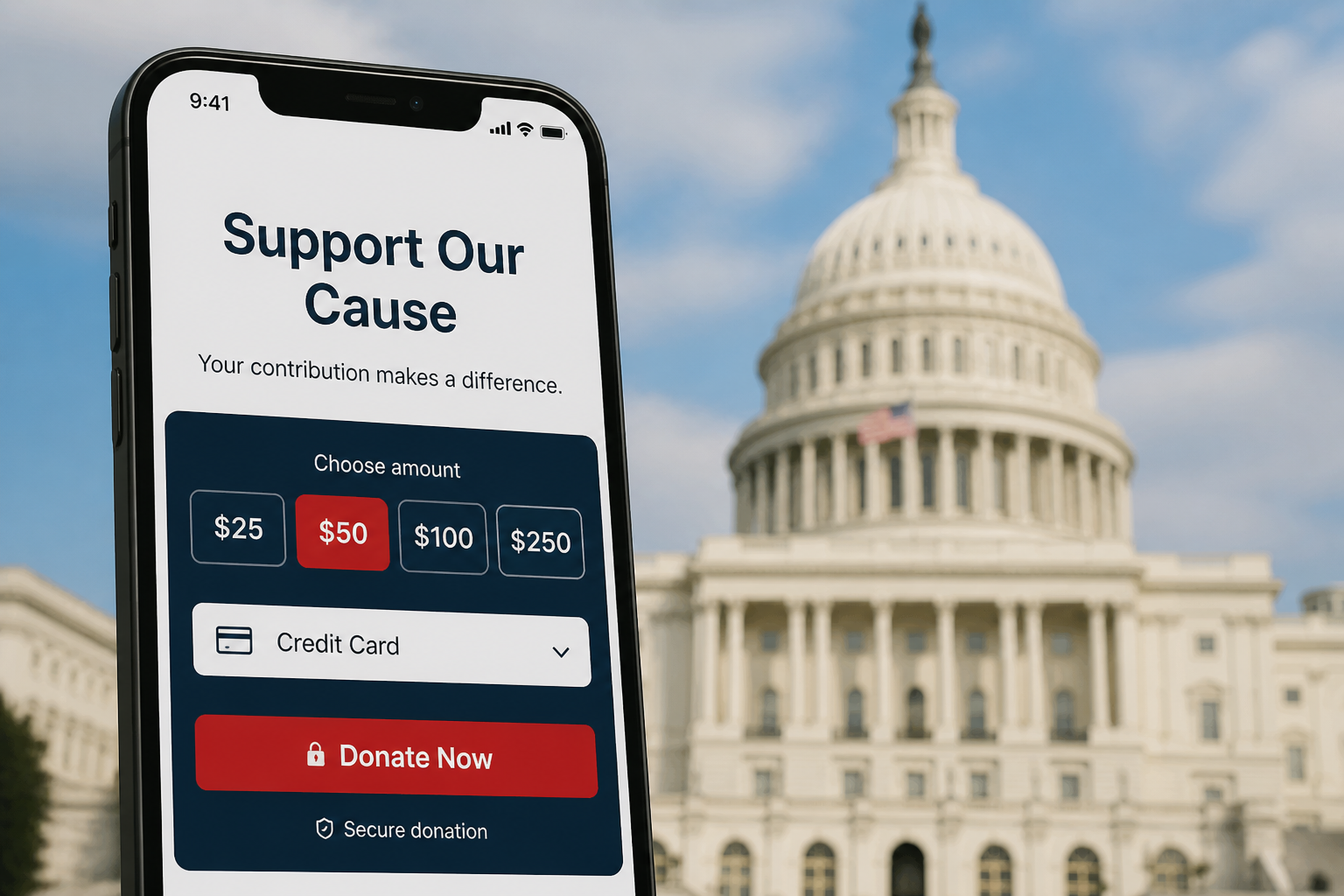
The strategic advantage of these platforms lies in their simplicity. When a supporter is motivated by an email, social media post, or a candidate’s performance in a debate, the ability to act on that impulse immediately is critical. By eliminating the need to repeatedly enter credit card details, WinRed transforms fleeting motivation into tangible financial support. This technology has empowered a new generation of donors who may not be able to write a four-figure check but are willing and able to contribute $10, $25, or $50 multiple times throughout a cycle.
SMS and Text-to-Donate: The Direct Line to Your Supporters
If email was the workhorse of digital fundraising in the 2010s, then SMS (short message service) is its modern-day successor. The logic is simple: campaigns must meet voters where they are, and increasingly, they are on their mobile devices. The engagement rates for text messaging are unparalleled; industry reports from marketing analytics firms regularly show SMS open rates exceeding 90%, figures that email marketers can only dream of.
Best Practices for SMS Fundraising:
- Clarity and Urgency: A text message is not the place for a lengthy policy essay. The message must be concise, with a clear call to action and a link to a mobile-optimized donation page.
- Compliance is Key: Campaigns must secure explicit consent from supporters before sending messages. Adherence to the Telephone Consumer Protection Act (TCPA) is non-negotiable to avoid legal jeopardy and maintain trust.
- Respect the Inbox: Bombarding supporters with multiple texts per day is the fastest way to generate opt-outs. A disciplined, strategic cadence that aligns with key campaign moments is far more effective than a constant stream of requests.
Data Integration: The Brains Behind the Fundraising Brawn
The most sophisticated campaigns understand that fundraising platforms are not just tools for processing transactions; they are powerful data collection engines. Every donation provides a valuable data point: what message prompted the gift? What time of day was it made? Was it a one-time or recurring contribution? When this information is integrated with the campaign’s Customer Relationship Management (CRM) system, it allows for the creation of highly detailed supporter profiles.
This data-driven approach enables campaigns to move beyond generic, one-size-fits-all appeals. A supporter who donates in response to a message about judicial appointments can be segmented for future communications on that topic. A donor who gives regularly in small amounts might be a good candidate for a recurring donation program. This level of personalization not only increases fundraising efficiency but also makes supporters feel seen and understood, strengthening their bond with the campaign. It embodies the conservative principle of fiscal responsibility—ensuring every dollar spent on outreach is targeted as effectively as possible.
Navigating the Risks: Donor Fatigue and Data Privacy
While powerful, these new tools are not without their risks. The ease of digital fundraising can lead to an over-reliance on high-urgency, emotionally charged appeals that can exhaust supporters over a long campaign cycle. Donor fatigue is a real phenomenon, and campaigns that constantly “cry wolf” will see their engagement rates diminish over time. A balanced communications strategy that mixes fundraising asks with genuine updates, volunteer opportunities, and valuable content is essential for long-term supporter retention.
Furthermore, as campaigns collect more data, they take on a greater responsibility to protect it. Transparency about how donor information is used is critical for building and maintaining trust. Voters who provide their financial and personal data expect it to be secure. A commitment to data privacy is not only good practice but also aligns with the conservative values of individual responsibility and security.
The Path Forward: Arming Campaigns for a Digital Future
The evolution of political fundraising technology has permanently altered the mechanics of campaigning. Success is no longer determined solely by access to wealthy donors but by a campaign’s ability to build and mobilize a broad base of grassroots supporters online. For conservative campaigns, mastering the tools of the trade—from the seamless transactions of WinRed to the direct engagement of SMS and the strategic insights of data integration—is fundamental to building a durable, well-funded, and victorious operation.