Modernizing the Mailbox: Fusing Direct Mail and Digital for Conservative Wins
The Myth of the Obsolete Mailer
In an era dominated by digital noise, it’s tempting to dismiss direct mail as a relic of past campaigns. Yet, data consistently shows that a physical mail piece not only commands attention but also holds a higher trust factor than its digital counterparts. According to industry reports from the Data & Marketing Association, direct mail often sees higher household response rates than all digital channels combined. For political strategists, the takeaway isn't to choose between mail and digital; it's to recognize that the modern campaign’s competitive edge lies in their seamless integration.
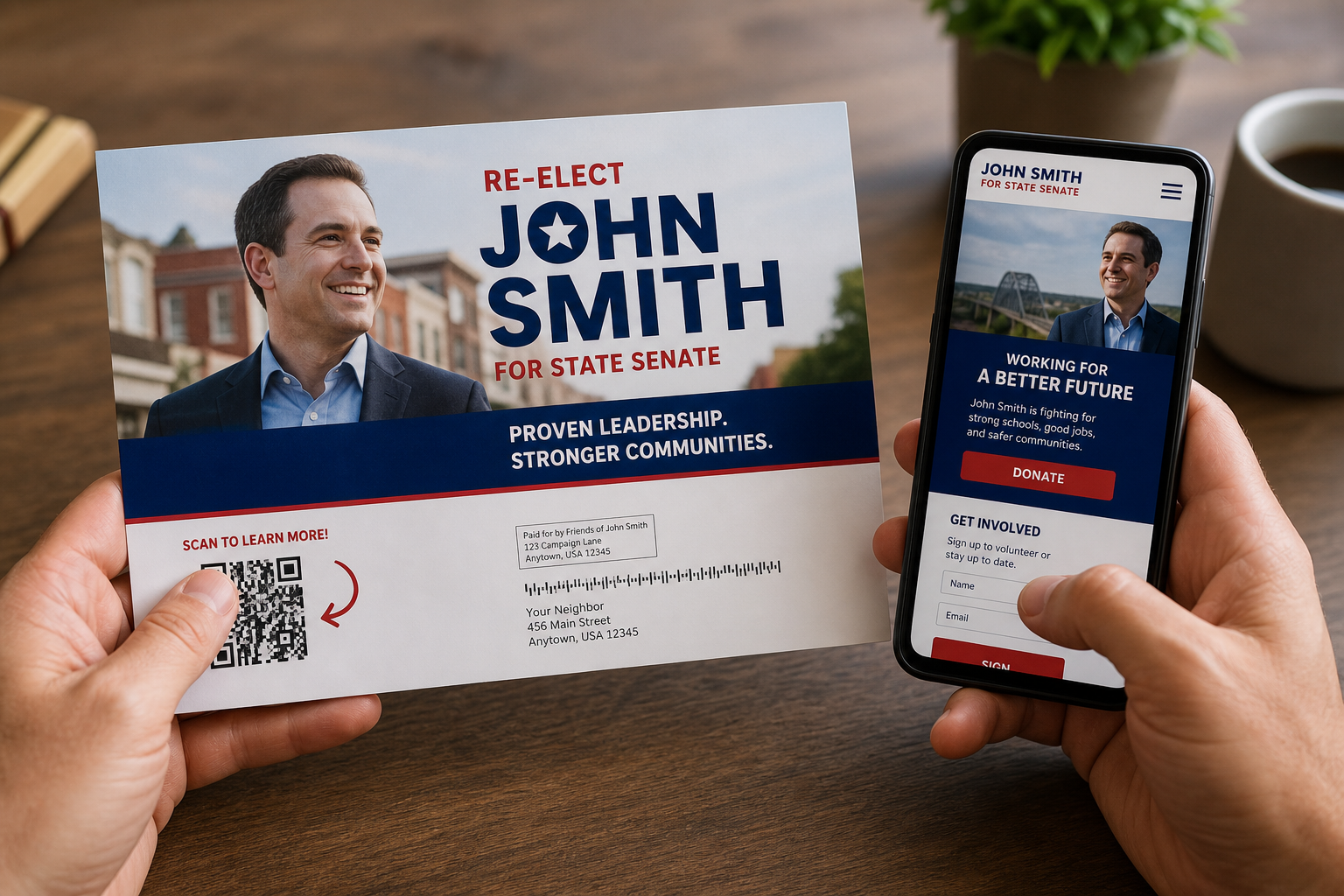
A well-executed mail program no longer ends when the piece hits the mailbox. It now serves as a powerful, tangible catalyst for digital action, creating a multi-channel “surround sound” effect that reinforces your message, drives engagement, and provides invaluable data for optimizing your entire campaign strategy.
Key Tactics for Bridging the Physical and Digital Divide
Integrating direct mail with digital outreach moves it from a standalone expense to a central component of your voter engagement funnel. Here are the essential strategies that conservative campaigns should be deploying to maximize impact and ROI.
1. QR Codes: The Simplest On-Ramp to Digital Action
Once a novelty, QR codes are now a universally understood tool. Placing a unique QR code on a mailer provides the lowest-friction path for a voter to engage online. Instead of asking them to type a complex URL, a simple scan can direct them to a specific action-oriented destination:
- Donation Pages: A QR code can link directly to a pre-filled donation form, capitalizing on the moment of interest generated by the mailer.
- Video Messages: Connect voters with a powerful, 60-second video from the candidate that reinforces the mailer’s message.
- Volunteer & Event Sign-ups: Drive grassroots action by linking to a simple form for rallies, town halls, or phone banking events.
By using trackable QR codes, your campaign gains immediate, granular data on which mailers are generating the most effective response, allowing for real-time strategic adjustments.
2. USPS Informed Delivery® Integration
The U.S. Postal Service’s Informed Delivery® service now has tens of millions of subscribers who receive a daily email with grayscale scans of their incoming mail. This creates a powerful, free touchpoint for campaigns. By registering your mailpiece with the USPS, you can place a full-color, clickable companion ad next to the scan of your mailer in that email. This strategy achieves two critical goals: it primes the voter for the mailer’s arrival, and it provides a direct digital path to your website before they even touch the physical piece. With email open rates for Informed Delivery reportedly exceeding 60% [VERIFY], it's a channel campaigns cannot afford to ignore.
3. Addressable Geofencing and IP Matching
This is where campaign integration becomes truly sophisticated. Using your mailing list, services can match physical addresses to their corresponding IP addresses. This allows you to serve targeted digital display ads to devices (laptops, phones, smart TVs) within a specific household before, during, and after your direct mail piece is scheduled to arrive. Imagine a voter seeing a banner ad for your candidate on their favorite news site, receiving a compelling mailer a day later, and then seeing a follow-up video ad on social media. This layered approach dramatically increases message retention and creates an impression of campaign ubiquity and momentum.
4. Personalized URLs (PURLs)
A Personalized URL (e.g., VoteSmith.com/Jane-Doe) printed on a mailer remains a highly effective tool. It signals to the voter that the communication is specifically for them, increasing the likelihood of a visit. When the voter lands on the PURL, the page can be pre-populated with their information and feature a tailored message. Most importantly, it provides perfect attribution—you know exactly which individual responded to a specific mailer, offering unparalleled data for refining voter models and follow-up communications.
The Conservative Advantage: Building Trust Through Targeted Outreach
For conservative campaigns, this integrated approach offers a powerful method for bypassing establishment media filters and speaking directly to voters. It’s a strategy built on relevance and respect for the voter’s attention. Instead of blanketing a district, you’re delivering a cohesive, data-informed message to the households most likely to be receptive.
This fusion of mail and digital enhances fundraising efficiency, sharpens voter targeting, and builds a more robust data profile of your supporters. By tracking engagement across channels, you can identify your most committed supporters and move them up the engagement ladder, from mail responder to online donor to active volunteer.
Conclusion: A Cohesive Strategy for a Crowded Landscape
Direct mail is not an artifact of the past; it is a high-impact anchor for a modern, multi-channel campaign. By treating it as the starting point for a digital conversation, campaigns can cut through the clutter, make a memorable impression, and collect the data needed to outmaneuver their opponents. In a world of fleeting digital ads and overflowing inboxes, the campaigns that master the art of integrating the mailbox with the browser will be the ones that build lasting voter relationships and secure victory on election day.