Modernizing Your Message: The New Rules for Campaign Surrogates
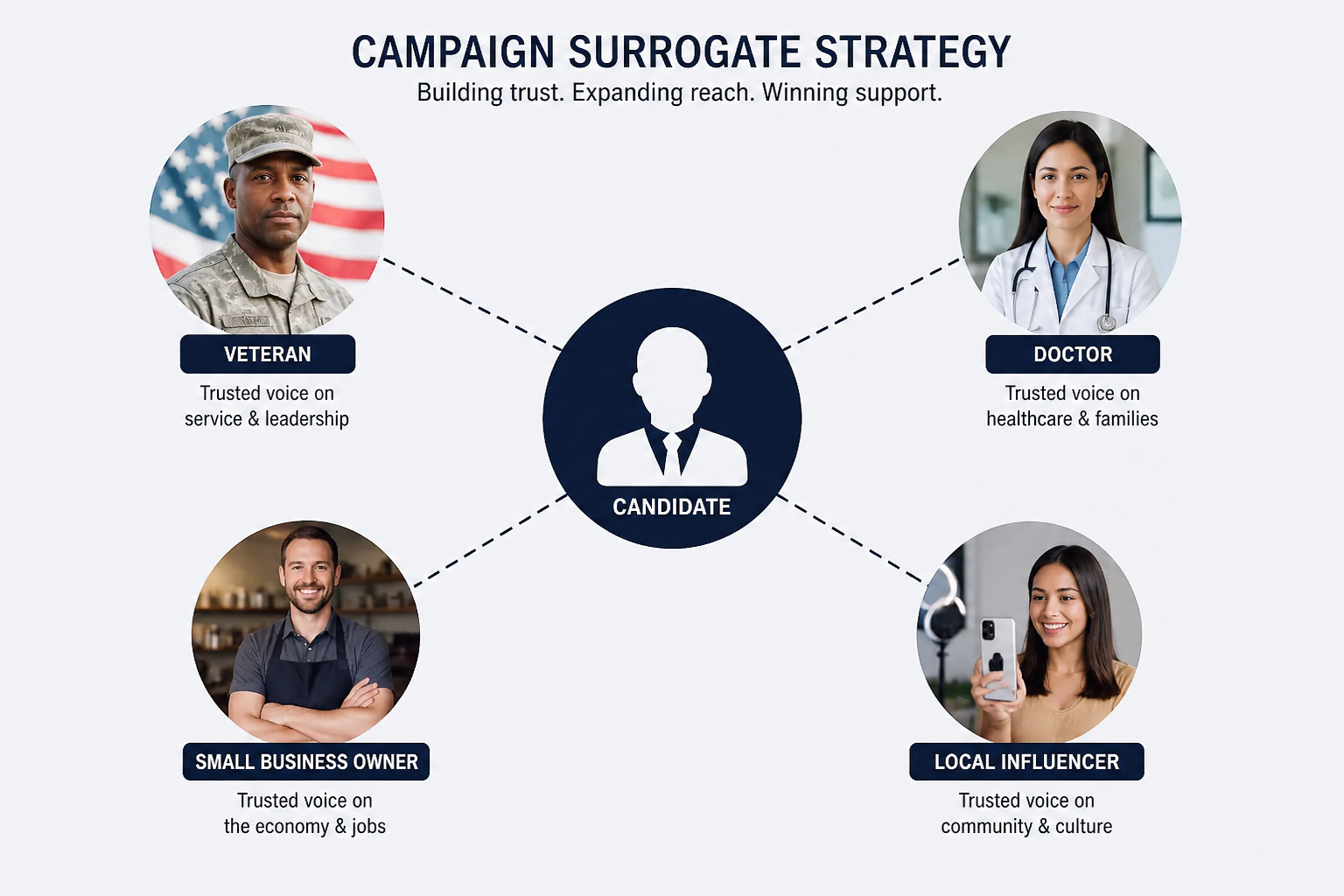
Beyond the Endorsement: Differentiating Passive Support from Active Surrogacy
In political campaigns, the terms “endorsement” and “surrogate” are often used interchangeably, but this conflation is a strategic error. An endorsement is a static statement of support—a valuable press release, a name on a website. A surrogate, however, is a dynamic asset: an active, credible voice who carries the campaign’s message to audiences the candidate cannot reach alone. While a high-profile endorsement provides a momentary media boost, a well-managed surrogate program offers sustained, multi-channel engagement that builds trust and persuades voters over time. In today’s fragmented media landscape, conservative campaigns must evolve from simply collecting endorsements to strategically deploying surrogates.
The Modern Surrogate Spectrum: From Validators to Connectors
An effective surrogate strategy relies on a diverse coalition of voices, each serving a specific purpose. Campaigns should think of their surrogates as a portfolio of assets, categorized by their unique value proposition.
- High-Profile Validators: These are the traditional surrogates—elected officials, party leaders, and national figures. Their primary role is to lend institutional credibility, generate earned media, and energize major donors. Their endorsement signals to voters and the press that the candidate is a serious contender worthy of support from established leaders.
- Issue-Area Experts: When the conversation turns to healthcare, the economy, or national security, an expert surrogate is indispensable. A respected local doctor discussing healthcare policy or a retired general analyzing foreign policy lends a level of authority and detail that a political candidate cannot always achieve. These surrogates are crucial for winning over informed, issue-oriented voters and for providing depth during policy debates.
- Community Connectors: Perhaps the most underutilized asset, community connectors are local influencers who hold deep trust within specific constituencies. This includes pastors, small business owners, community organizers, and local social media personalities. While they may not have a national profile, their endorsement can be more powerful than a celebrity's in driving votes within their network. According to Nielsen data, 92% of consumers trust recommendations from people they know, making these grassroots surrogates essential for authentic voter contact.
Building a Digital-First Surrogate Playbook
Once you have identified your surrogates, the real work begins. Activating them effectively requires a disciplined, digital-first approach that goes far beyond the occasional rally appearance.
1. Equip for Success
Your surrogates are volunteers, not campaign staff. Make it easy for them to advocate on your behalf. Provide them with a regularly updated digital toolkit containing:
- Core Talking Points: Concise, clear, and consistent messaging on key issues.
- Rapid Response Briefings: Quick updates to counter opposition attacks or capitalize on breaking news.
- Shareable Content: Professionally designed graphics, short video clips, and pre-written social media posts.
- Media Training: Basic guidance for handling interviews on local radio, podcasts, or television.
2. Amplify Their Voice
A surrogate’s impact is directly proportional to their reach. The campaign’s digital team should actively promote their efforts. When a surrogate pens an op-ed, the campaign should promote it across all its social channels and email lists. When they appear on a podcast, share the clip with a targeted ad buy. This symbiotic relationship ensures the surrogate’s message reaches the widest possible audience while reinforcing the campaign’s core narrative.
3. Measure Impact and ROI
A modern surrogate program must be data-driven. To move beyond vanity metrics, campaigns should track the tangible impact of their surrogates’ activities.
- Custom Tracking Links: Use UTM codes or custom Bitly links to measure how many clicks, sign-ups, or donations are driven by a specific surrogate’s social media post or email blast.
- Social Listening: Monitor online conversations to gauge audience sentiment and identify which messages are resonating.
- Geographic Targeting: Deploy surrogates for virtual events or media appearances in key precincts and track shifts in voter sentiment or volunteer engagement in those specific areas.
Best Practices for Conservative Campaigns
For conservative campaigns seeking to bypass hostile media filters, a strong surrogate program is a non-negotiable part of a winning strategy. To maximize effectiveness, focus on two key principles: authenticity and message discipline. While providing talking points is essential, allow your community-level surrogates to deliver the message in their own voice. An overly scripted local business owner will come across as inauthentic. At the same time, ensure all surrogates are aligned on the campaign’s foundational principles to prevent off-message distractions that can derail a news cycle.
By treating surrogates as a strategic communications force multiplier, conservative campaigns can build a powerful, multi-layered messaging apparatus. This approach not only extends reach but also builds a resilient network of trust that can withstand media attacks and persuade undecided voters in the critical final stretch of an election.