Navigating the Maze: A Conservative Guide to Winning on Connected TV
The End of the Primetime Address
For decades, political advertising followed a simple formula: secure a primetime slot on one of the three major networks and broadcast a message to millions of American households. That era is definitively over. Today, the media landscape is a fractured mosaic of streaming services, on-demand apps, and web-enabled devices collectively known as Connected TV (CTV). According to industry analysis from sources like eMarketer, CTV is now accessible in well over 85% of U.S. households, fundamentally reshaping how voters consume content and how campaigns must reach them.
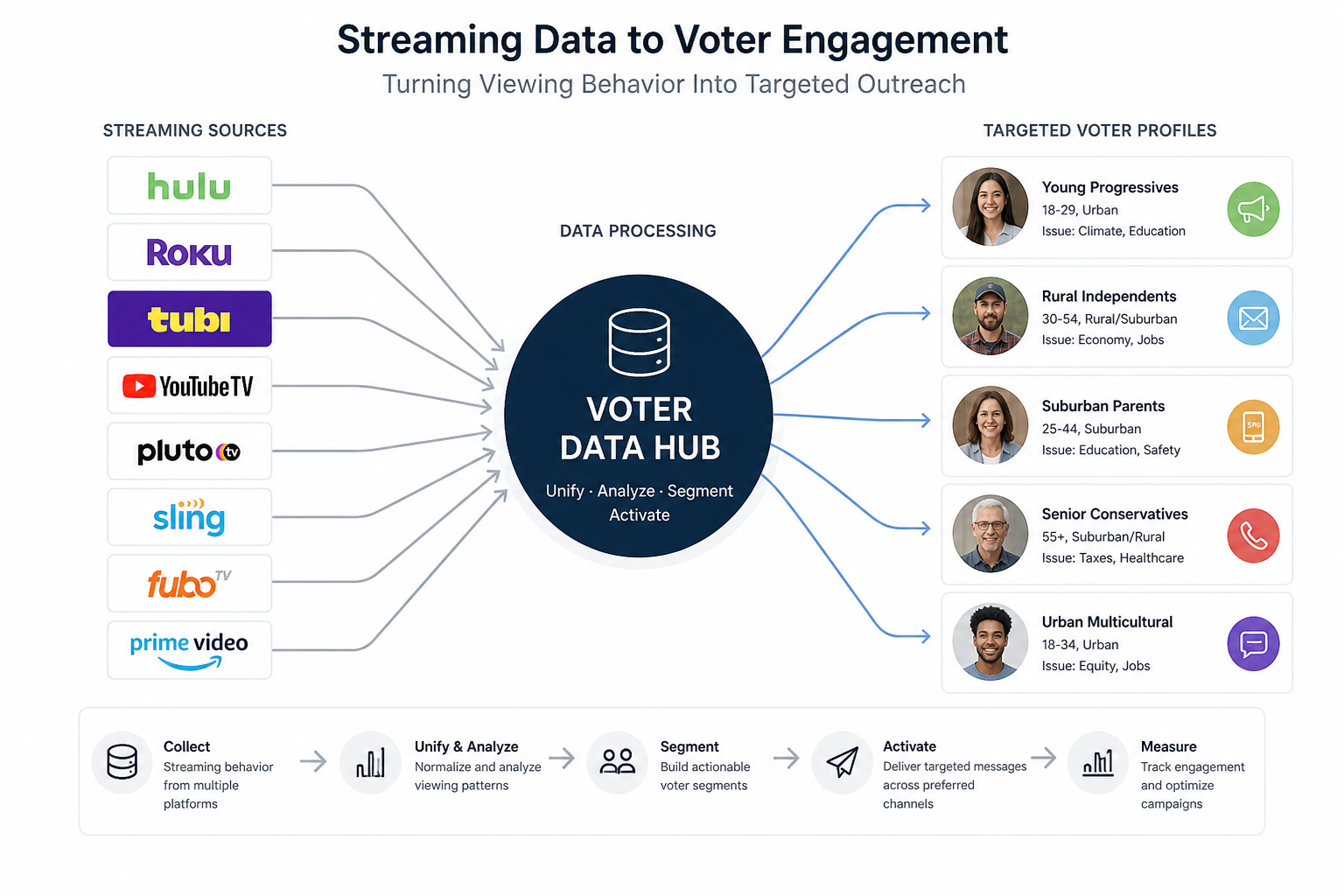
This massive shift presents a dual reality for campaign managers. While CTV offers unprecedented opportunities for precision targeting, it also creates the challenge of audience fragmentation. Voters are no longer in one place; they are scattered across dozens of platforms like Hulu, Roku, Pluto TV, and Peacock. For conservative campaigns seeking to maximize every dollar and bypass legacy media filters, navigating this complex ecosystem isn't just an option—it's essential for victory.
Understanding Audience Fragmentation
Audience fragmentation is the reality that a campaign’s target audience is spread thinly across a vast number of channels and platforms. A voter might watch a live news broadcast on Sling TV, a sitcom on Hulu, and a movie on a free, ad-supported service like Tubi—all in the same evening. This behavior makes it impossible to achieve significant reach through a single ad buy, a stark contrast to the days of linear television dominance.
This fragmentation creates several immediate challenges for political advertisers:
- Wasted Ad Spend: Without a sophisticated strategy, campaigns risk serving the same ad repeatedly to a small group of highly engaged streamers while completely missing persuadable voters on other platforms.
- Inconsistent Measurement: Each streaming service operates as a “walled garden,” making it difficult to track a voter’s journey and measure unique reach and frequency across the entire media plan.
- Creative Fatigue: Viewers who see the same ad dozens of time on different apps are more likely to tune it out, diminishing the message's impact and wasting valuable impressions.
The Conservative Opportunity in a Fragmented World
While the challenges are real, the fragmented CTV landscape offers a distinct advantage for conservative campaigns. For years, our messages have been filtered, distorted, or ignored by legacy media gatekeepers. CTV provides a direct, unmediated channel to speak to voters in their living rooms, on their terms.
Fragmentation, when approached strategically, becomes an asset. It allows for a level of microtargeting that traditional television could never offer. Instead of buying a broad cable news audience that includes hostile viewers, a campaign can use data overlays to target households based on voter registration, past donor history, issue sentiment, or even consumer behavior. This allows us to deliver a tailored message about economic policy to a small business owner in one zip code and a different message about school choice to a family in another—all with unparalleled efficiency.
A Tactical Framework for Winning on CTV
To conquer fragmentation, campaigns must move beyond traditional media buying and adopt a data-centric, platform-agnostic approach. Here are the core tactics for building a successful CTV strategy:
1. Centralize Buys Through Programmatic Platforms
Instead of negotiating with dozens of individual streaming services, campaigns should leverage demand-side platforms (DSPs). These technologies provide a single interface to purchase ad inventory across the entire CTV ecosystem. This allows your media team to manage frequency, control targeting, and optimize the campaign in real-time, ensuring your message reaches the widest possible swath of your target audience without over-saturating any single segment.
2. Leverage First-Party Data
Your campaign’s most valuable asset is its own data. Voter files, email subscriber lists, and donor databases can be onboarded and matched to households for CTV advertising. This ensures you are reaching known supporters to drive get-out-the-vote efforts or targeting persuadable voters identified through grassroots canvassing. By prioritizing your own data, you reduce reliance on third-party segments and enhance the precision of your ad spend.
3. Focus on Geographic and Contextual Relevance
CTV's digital nature allows for hyper-local targeting down to the zip code level, making it perfect for congressional and state-level races. Campaigns can ensure that only voters within a specific district see their ads, eliminating the waste inherent in broad Designated Market Area (DMA) buys. Furthermore, contextual targeting allows you to place ads within specific programming genres—such as news, sports, or family-friendly content—to align your message with the viewer's mindset.
4. Insist on Transparent Measurement
Demand transparency from your media partners. It’s crucial to measure key performance indicators (KPIs) beyond simple impressions. Track metrics like Video Completion Rate (VCR) to ensure viewers are actually watching your ads. More importantly, use post-campaign analysis to measure lift in key areas like name recognition, voter intent, or website traffic from targeted households. True success isn't just about reaching voters; it's about moving them.
Moving Forward: From Broadcast to Bespoke
The fragmentation of the television audience is not a temporary trend; it is the new reality. For conservative campaigns, this reality presents a historic opportunity to break free from the constraints of traditional media and engage voters with a level of precision and efficiency never before possible. The campaigns that succeed will not be those that mourn the loss of the mass broadcast era, but those that master the tools of the modern, fragmented landscape to deliver a bespoke message that resonates, persuades, and wins.