Punching Above Your Weight: The Modern Tech Stack for Down-Ballot Campaigns
The Asymmetric Battlefield of Local Elections
In the world of political campaigns, national and statewide races command the lion’s share of funding, media attention, and technological resources. But the real foundation of political power is built at the local level: in school boards, city councils, and state legislatures. For too long, down-ballot conservative campaigns have operated at a disadvantage, fighting sophisticated, well-funded opposition with spreadsheets, disjointed email lists, and sheer grit. That era is over. The democratization of campaign technology now allows smaller, budget-conscious campaigns to deploy the same data-driven strategies that were once the exclusive domain of presidential contenders.
The Core Challenge: Disconnected Data and Wasted Effort
The single greatest inefficiency in a traditional down-ballot campaign is data fragmentation. Voter information lives in one spreadsheet, donor lists in another, and volunteer sign-ups are trapped in a third-party form builder. This disjointed approach makes it impossible to get a 360-degree view of your supporters. You can't easily identify a volunteer who has also donated, or a yard sign requestor who lives in a key precinct. This disconnect leads to wasted time, missed opportunities, and a failure to mobilize your base effectively. In a race decided by a few hundred votes, such inefficiency is a critical liability.
Building the Campaign's Central Nervous System: The Unified CRM
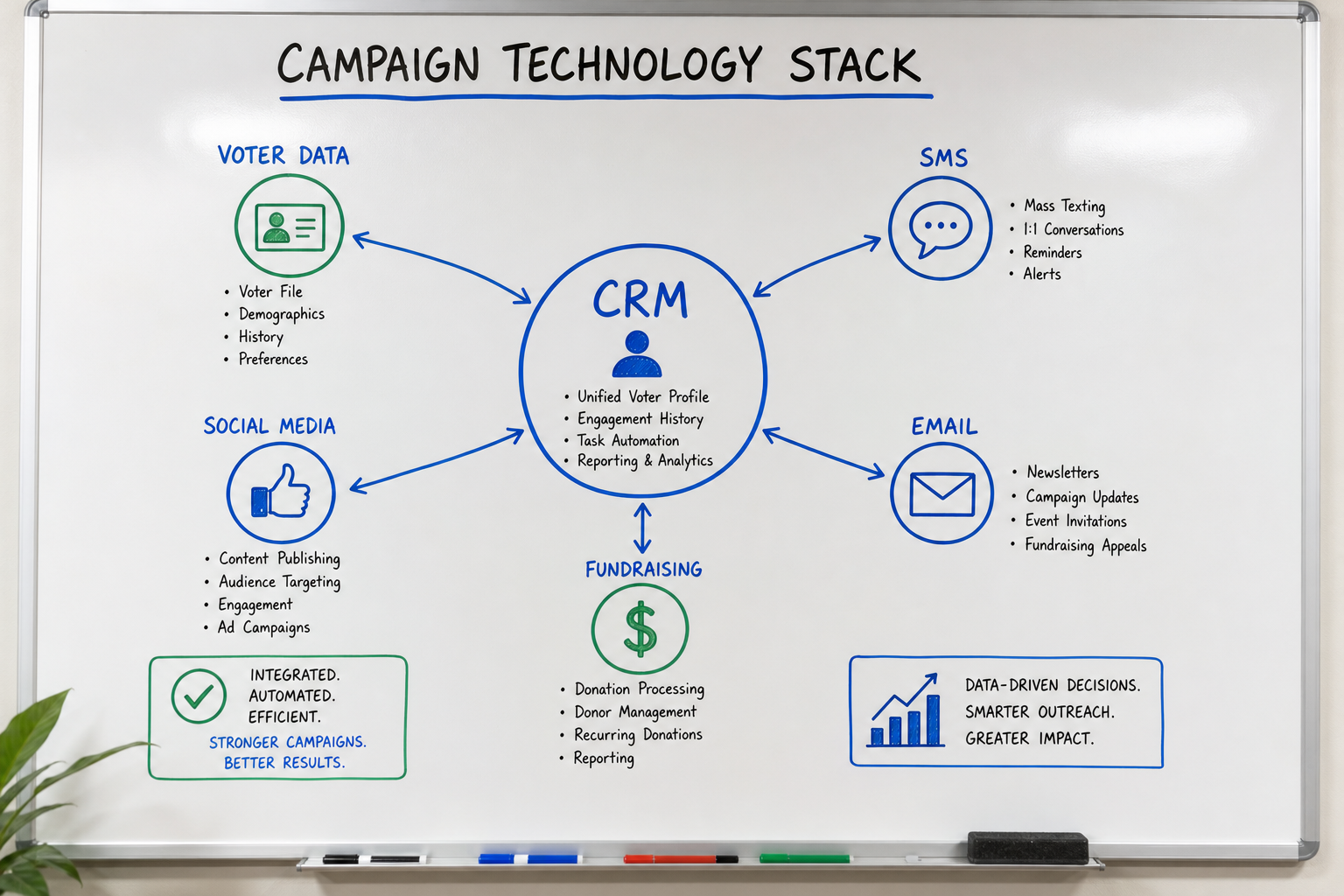
The solution is a centralized Voter Relationship Management (VRM) or Customer Relationship Management (CRM) platform. This isn't just a digital address book; it’s the operational brain of a modern campaign. A unified CRM centralizes every piece of data on voters, volunteers, and donors, tracking every interaction—from website visits and email opens to event attendance and donation history.
This single source of truth allows for powerful segmentation. With a few clicks, you can generate a list of all registered Republicans who have attended a rally but have not yet donated, or identify undecided voters in a specific neighborhood for a targeted canvassing push. Platforms designed for the political space, like those offered by companies such as Conservativestack.com or Deployer.com, package this power into affordable, scalable solutions that are no longer out of reach for a state representative or county commissioner campaign.
Essential Tools for Down-Ballot Dominance
With a strong CRM at the core, campaigns can integrate essential communication and fundraising tools to create a powerful, efficient operation. Here are the non-negotiable components of a modern down-ballot tech stack:
Voter Contact and Mobilization
Email and SMS (text messaging) are the workhorses of digital voter outreach. While email is excellent for longer-form content like policy updates and newsletters, SMS is unmatched for immediacy and action. According to industry research, SMS messages have an open rate as high as 98%, making them ideal for Get-Out-the-Vote (GOTV) reminders, event notifications, and urgent fundraising appeals. A modern platform allows you to automate and personalize these communications, ensuring the right message reaches the right voter at the right time without manual effort.
Grassroots Fundraising at Scale
Winning requires resources, and modern digital tools have revolutionized grassroots fundraising. Your campaign needs simple, mobile-optimized online donation pages that make it effortless for supporters to contribute. Key features to look for include recurring donation options—which provide a predictable revenue stream—and peer-to-peer fundraising tools that empower your most ardent supporters to raise money on your behalf. When your fundraising platform integrates with your CRM, every donation is automatically logged, allowing you to track donor behavior and cultivate relationships for future asks.
Digital Advertising with Precision
You don't need a multi-million-dollar budget to be effective with digital ads. Platforms like Facebook and Google allow for hyper-precise geotargeting, enabling you to serve ads directly to voters in specific precincts, zip codes, or even legislative districts. By uploading segmented lists from your CRM, you can run targeted ad campaigns aimed at persuading undecided voters or mobilizing your base. A small, well-placed ad budget can deliver a far greater return on investment than a costly and untargeted direct mail piece.
The Force Multiplier: An Integrated System
Simply having these tools is not enough; their power comes from integration. An integrated tech stack automates workflows and creates a seamless experience for both the campaign and the voter. Consider this common scenario:
- A voter sees a targeted Facebook ad and clicks to your website.
- They sign up for your email list via a form on the landing page.
- Their contact information is automatically added to the CRM and tagged with their interest area.
- This triggers an automated welcome email sequence that introduces the candidate and key platform issues.
- A week before Election Day, that same voter automatically receives a personalized SMS message reminding them of their polling location.
This entire engagement funnel runs automatically, allowing your campaign staff and volunteers to focus on high-value activities like direct voter contact and event organizing. It's the difference between having a box of car parts and a high-performance engine.
The Strategic Advantage is No Longer Optional
In today's political environment, technology is not a luxury—it is a fundamental requirement for victory. For conservative down-ballot campaigns, adopting a modern, integrated tech stack is the single most effective way to level the playing field. It enables you to operate with the professionalism of a national campaign, make data-informed strategic decisions, and maximize the impact of every dollar and volunteer hour. The tools are accessible, affordable, and essential. The campaigns that embrace them will be the ones that win.