Scaling the Message: How Campaign Chatbots Offer a Direct Line to Voters
What Are Chatbots and Why They Matter in Modern Politics
Chatbots are automated messaging tools designed to simulate human conversation, providing users with instant answers and guiding them toward specific actions. While once the domain of e-commerce and customer service, this technology has become a vital asset in modern digital engagement. According to analysis from Juniper Research, chatbots were projected to handle over 22 billion customer interactions in 2023, a figure that continues to climb as organizations embrace smart automation. For political campaigns facing the dual pressures of limited resources and a growing demand for personalized voter contact, chatbots offer a scalable, efficient solution for communication.
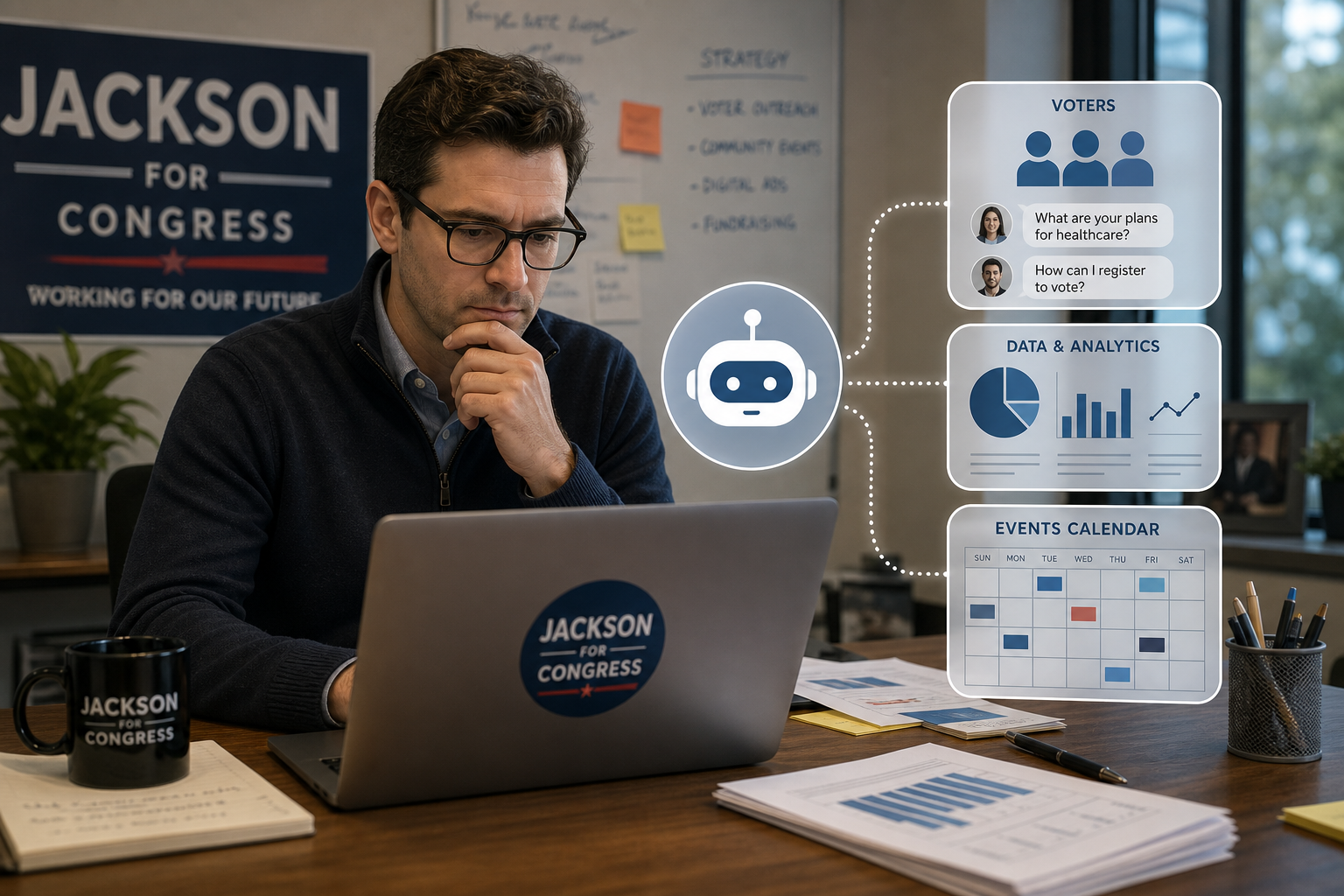
In a political landscape where every interaction counts, these automated systems allow campaigns to engage with supporters 24/7 across websites, social media, and messaging apps. They are no longer a novelty but a strategic tool for collecting data, disseminating information, and mobilizing supporters—all without overwhelming campaign staff.
The Strategic Advantage for Conservative Campaigns
For conservative campaigns often navigating a hostile media environment, chatbots provide more than just efficiency; they offer a crucial strategic advantage. By creating direct, unmediated communication channels, campaigns can reclaim control of their narrative and build stronger, more resilient relationships with their base.
Message Control and Bypassing Media Filters
The most significant benefit of a well-implemented chatbot strategy is message control. Instead of relying on traditional media outlets to interpret and convey policy positions, campaigns can speak directly to voters. When a supporter has a question about a candidate’s stance on economic policy or a specific piece of legislation, a chatbot can provide an immediate, pre-approved, and accurate answer. This direct line of communication inoculates the campaign’s message against media spin and ensures supporters receive information directly from the source.
Scalable, Personalized Engagement at All Hours
A campaign’s website and social media channels are often the first stop for interested voters, but staff cannot be available around the clock. Chatbots solve this problem by providing instant responses to common inquiries at any time of day. Whether a voter wants to find their polling place at 10 PM or learn about a policy platform at 6 AM, the chatbot is there to help. This immediate responsiveness makes supporters feel heard and valued, fostering a deeper sense of connection and loyalty to the campaign. It also frees up valuable staff and volunteer time to focus on higher-impact activities like direct voter outreach and event organizing.
Intelligent Data Collection and Voter Profiling
Every conversation a chatbot has is a data collection opportunity. By analyzing the questions voters ask, campaigns can gain real-time insights into the issues that matter most to their constituents. Are voters frequently asking about inflation, border security, or school choice? This data helps refine messaging, shape talking points for upcoming events, and inform ad targeting. The information gathered through chatbot interactions can be integrated with existing voter databases, creating richer, more detailed profiles that allow for sophisticated microtargeting and personalized follow-up communications.
Best Practices for Implementing Campaign Chatbots
To leverage this technology effectively, campaigns must move beyond simple, robotic scripts and focus on creating a valuable user experience. A poorly executed chatbot can frustrate voters and damage a campaign’s credibility.
- Define Clear Objectives: Before launching a chatbot, determine its primary goal. Is it to drive event sign-ups, answer FAQs, recruit volunteers, or solicit donations? A focused objective leads to clearer scripts and more measurable results.
- Craft an Authentic Voice: The chatbot’s tone should align with the candidate’s brand and voice. The conversation should feel helpful and authentic, not sterile or corporate. Use clear, concise language and avoid political jargon.
- Provide an Escalation Path: Automation has its limits. Always give users a clear option to connect with a live person if the chatbot cannot resolve their issue. A frustrating, circular conversation with a bot is a quick way to lose a potential supporter.
- Maintain Transparency: Be upfront that the user is interacting with an automated assistant. According to consumer research, a majority of users are comfortable interacting with chatbots for quick tasks, but transparency is key to building trust. Similarly, be clear about how any collected data will be used.
The Future of Voter Engagement is Conversational
In an increasingly crowded digital landscape, the campaigns that win will be those that build genuine connections with voters at scale. With the global artificial intelligence market projected to exceed $300 billion by 2025, according to Statista, the role of AI-driven tools in politics is only set to expand. Chatbots represent a powerful and accessible entry point into this new era of political communication. By embracing smart automation, conservative campaigns can enhance their operational efficiency, secure their messaging, and build the kind of responsive, data-informed organization needed to succeed in the 21st century.