The Engagement Gap: Why Voters See Campaign Content But Rarely Act on It
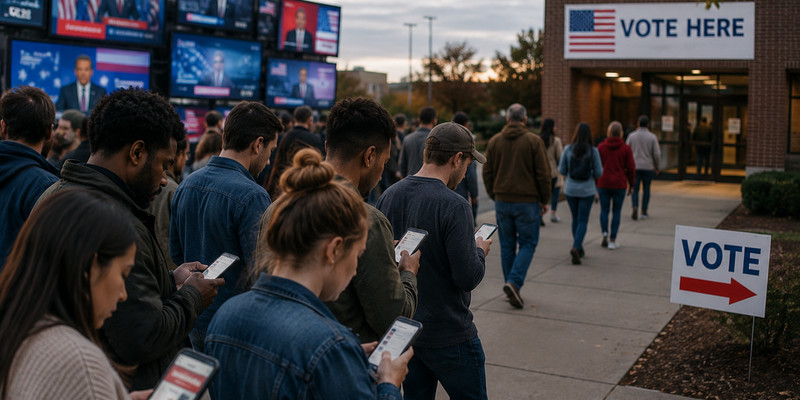
Modern political campaigns generate more digital content than ever before. Videos, graphics, email sequences, livestreams, ads, and rapid-response messaging now reach voters constantly across nearly every major platform. Visibility is no longer the primary problem for most campaigns.
Engagement is.
Campaigns are increasingly discovering that being seen does not automatically translate into action. Voters may consume campaign content daily without donating, volunteering, sharing posts, attending events, or even publicly interacting at all. This growing disconnect between visibility and participation is creating what many strategists now recognize as the "engagement gap."
In digital politics, attention can be captured quickly. Turning that attention into meaningful action is becoming much harder.
Visibility Is No Longer the Same as Influence
For years, campaigns measured success largely through reach:
- Impressions
- Video views
- Follower growth
- Click-through rates
These metrics still matter, but they often create a misleading picture of actual voter commitment.
A campaign may generate millions of views while producing very little real-world mobilization. High exposure does not necessarily mean voters feel emotionally connected enough to participate.
This is one of the defining realities of modern digital campaigning: audiences are constantly consuming political content, but far fewer are actively engaging with it.
The Rise of Passive Political Consumption
Social media platforms have fundamentally changed how voters interact with politics.
Many users now consume political information passively: scrolling quickly through content, watching short clips without responding, reading headlines without clicking, absorbing messaging silently.
This creates a much larger audience of politically aware but behaviorally inactive voters.
In many cases, these individuals are not disengaged from politics itself. They are simply overwhelmed by the volume of content competing for their attention. The Bipartisan Policy Center's 2024 national election survey found that a plurality of adults — 41 percent — said the primary way they interact with election content online is simply by browsing or reading posts, while active behaviors like commenting (16%), sharing (10%), and creating content (6%) represent a small fraction of total engagement — meaning that for every voter taking a visible action on your content, roughly three more are watching in silence.
Campaigns are operating inside an environment where every issue competes with entertainment, every message competes with algorithms, and every moment of attention is temporary. As a result, passive exposure has become common while active participation becomes rarer.
Emotional Saturation Is Reducing Response Rates
Another challenge is emotional exhaustion.
Political messaging is now continuous rather than cyclical. Voters encounter campaign content year-round across multiple platforms. Over time, constant exposure can reduce emotional responsiveness.
This creates a paradox: campaigns produce more content to remain visible, increased content volume creates audience fatigue, fatigue lowers engagement rates, and campaigns respond by increasing output even further.
Eventually, voters begin filtering political messaging out entirely.
This does not always mean they disagree with the campaign. Often, it simply means the audience has become emotionally overloaded. Pew Research Center tracking of voter sentiment showed that 65 percent of Americans always or often feel exhausted when thinking about politics, while only 10 percent report feeling hopeful with any regularity — a ratio that signals campaigns relying on urgency and intensity alone are pushing messaging into an emotional environment that is already at capacity.
Why Outrage Alone Stops Working
Many campaigns historically relied on urgency and outrage to drive participation. While emotional intensity can generate short-term spikes in engagement, constant escalation eventually loses effectiveness.
When every message feels urgent, urgency loses meaning, outrage becomes normalized, and audiences disengage emotionally.
Voters increasingly respond better to clarity, consistency, authenticity, and emotional steadiness.
Campaigns that rely entirely on reaction-based messaging often struggle to build durable engagement over time.
AI Is Changing How Campaigns Measure Real Interest
Artificial intelligence is helping campaigns identify the difference between visibility and actual voter investment.
Instead of measuring only likes and clicks, campaigns now analyze:
- Watch completion rates
- Repeat exposure patterns
- Content retention behavior
- Engagement consistency over time
- Message responsiveness across platforms
These behavioral signals provide a more accurate picture of voter interest than surface-level metrics alone.
For example: a voter who repeatedly watches long-form policy content may be more valuable than someone who casually likes posts frequently. Silent repeat viewers may be more persuadable than highly reactive audiences.
This shifts campaign strategy away from vanity metrics and toward deeper behavioral understanding.
Building Participation Instead of Chasing Attention
The campaigns that close the engagement gap are often the ones that stop chasing constant virality.
Instead, they focus on building trust gradually, creating recognizable messaging, maintaining emotional consistency, reinforcing community participation, and making engagement feel meaningful rather than transactional.
Voters are more likely to act when they feel included, emotionally connected, consistently respected, and part of something larger than content consumption.
This requires campaigns to think beyond impressions and focus more heavily on relationship-building.
The Long-Term Strategic Shift
The engagement gap reflects a broader transformation in political communication.
Campaigns are no longer competing simply for visibility. They are competing for emotional retention, behavioral consistency, sustained trust, and long-term participation.
That requires a different mindset.
The future of campaign strategy will likely belong to organizations that understand: attention alone is temporary, but participation creates durability.
Winning campaigns will not necessarily be the ones producing the most content.
They will be the ones that successfully convert passive audiences into active communities.