The Messenger Problem: Why Who Delivers the Message Matters as Much as the Message Itself
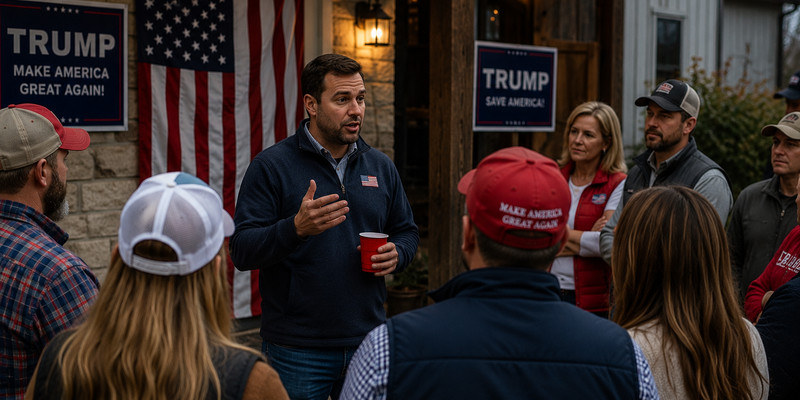
Political campaigns spend enormous resources crafting the right message. The right words. The right tone. The right issue framing. But in modern digital environments, campaigns are increasingly discovering that message quality alone does not determine whether voters listen.
Who delivers the message — and through what relationship — is becoming just as strategically important as what the message actually says.
The Collapse of the Single-Channel Campaign
For most of the twentieth century, campaigns communicated through a relatively small number of authoritative channels: broadcast television, radio, newspapers, and direct mail. Voters understood the source. They could evaluate the credibility of the messenger in a shared frame.
That world no longer exists.
Today, voters encounter political content through a sprawling ecosystem of sources — traditional news, social media, podcasts, short-form video, streaming platforms, newsletters, and creators — each with its own credibility logic, audience expectation, and trust relationship. What earns credibility on one channel can actively damage it on another.
A message that lands with authority in a long-form interview may feel out of place in a TikTok feed. A campaign that dominates Facebook may be structurally invisible to voters under 35. The channel is not just a distribution mechanism. It is part of the credibility signal itself.
Why Trusted Messengers Are Outperforming Paid Ads
One of the most significant shifts in recent campaign cycles is the growing effectiveness of trusted intermediaries over direct campaign communication.
Peer-to-peer outreach, relational organizing, endorsements from credible local voices, and earned media through creators and influencers are increasingly outperforming expensive paid advertising in converting voter attention into actual behavior change. The Center for Campaign Innovation's 2024 field test of relational organizing in Florida measured an 8.6 percentage point increase in turnout among voters who received texts from people they personally knew — while traditional peer-to-peer texting from unknown numbers produced no measurable effect at all, a result that quantifies precisely how much the relationship between sender and recipient determines whether a message moves behavior.
The mechanism is straightforward: voters extend the trust they have in a person or source to the message that person or source delivers. When a voter's neighbor, pastor, coworker, or favorite podcast host communicates a political message, it arrives with borrowed credibility that a campaign ad cannot manufacture.
This has fundamental implications for how campaigns allocate resources — and for how they think about outreach infrastructure beyond just content production.
Influencers Are Reshaping the Political Messenger Ecosystem
The emergence of digital creators as political messengers is one of the defining communication shifts of the current era.
Independent influencers, niche content creators, and podcast hosts now command audience relationships that rival — and in some demographics far exceed — the reach of legacy media institutions. Pew Research Center's November 2024 survey of more than 10,000 Americans found that one in five U.S. adults now regularly get news from social media influencers — and among adults under 30, that figure rises to 37 percent, with 77 percent of those influencers carrying no prior affiliation with any news organization, meaning the messengers reshaping a generation's political information diet are operating entirely outside the institutional credibility structures campaigns were built around.
These relationships are built on perceived authenticity, shared identity, and long-term audience trust developed through consistent, non-political content. When these creators engage with political topics or endorse campaigns, they bring those pre-existing trust relationships with them.
This changes the strategic calculus for campaigns significantly. The question is no longer only "how do we produce better content" but "whose voice should carry our message to which audience."
The Authenticity Tax on Campaign Communication
There is a structural credibility disadvantage baked into all campaign communication. Voters know campaigns are trying to persuade them. That awareness creates a natural skepticism filter — an authenticity tax — that campaign messaging must overcome before it can be taken at face value.
Earned media, third-party validators, and trusted messengers all help reduce this tax. They deliver the message through a relationship that the voter did not initiate with the campaign, which reduces the resistance that comes with knowing you are being targeted. The 2024 Edelman Trust Barometer documented that people now extend equal trust to peers — coworkers, neighbors, people like themselves — as they do to scientists, with 74 percent trusting both groups equally, while simultaneously reporting that more than 60 percent believe establishment leaders in government, business, and media are deliberately trying to mislead them — a trust landscape where the campaign itself occupies the least-credible tier and a known peer occupies the most.
Campaigns that ignore this dynamic — relying entirely on self-produced, self-distributed content — consistently fight uphill against voter skepticism in a way that campaigns with strong messenger ecosystems do not.
Building a Messenger Infrastructure
The campaigns that are adapting most effectively are not just producing content — they are building ecosystems of trusted voices who can carry their message into communities the campaign cannot reach directly.
This requires a different kind of investment:
- Identifying credible local validators and community leaders
- Cultivating relationships with relevant creators before campaign season
- Equipping supporters with shareable content designed for peer distribution
- Developing earned media strategies that generate third-party coverage
The message still matters. But in fragmented digital environments where every voter has their own information ecosystem, the messenger increasingly determines whether the message gets through at all.
The Long Game of Messenger Trust
Campaigns that build messenger infrastructure early have a structural advantage that cannot be replicated with late-cycle spending.
Credibility relationships take time to develop. A creator who has never mentioned a campaign cannot suddenly deliver an authentic endorsement two weeks before election day and expect it to carry the same weight as a voice that has engaged consistently for months.
The campaigns that win the messenger problem are not the ones that find the biggest megaphone at the last minute. They are the ones that quietly build a distributed network of credible voices long before the race reaches its final stretch.