The Quiet Power of Dark Social for Campaigns
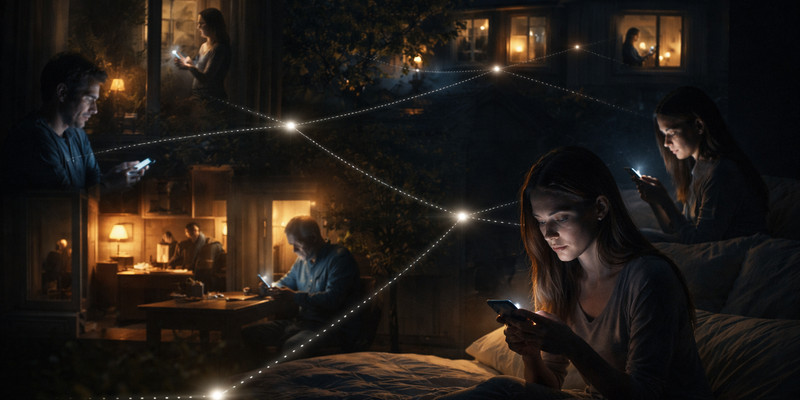
Most campaigns still act like public feeds are the whole battlefield. They spend hours polishing posts for the timeline, sweating over likes, and tracking comments as if those are the votes hiding inside the phone. But the real persuasion war has moved into the shadows—not in a sinister way, but in the human way. The conversations that matter most are happening in places you can’t see: group chats, DMs, forwarded videos, private Facebook groups, text chains, church threads, mom circles, hunting buddies, union buddies, fantasy leagues, and cousins who argue late at night. That’s dark social. It’s where belief gets tested and where decisions get made.
Public Is Performance, Private Is Conviction
A public post is a stage. People perform for their followers. They signal identity. They chase humor or outrage. Even when they agree with something, they often respond like an audience member, not a citizen. Private sharing is different. When someone sends a clip to a friend or drops a meme into the family group chat, they’re staking trust. They’re saying, “This is worth your time,” or “This is how I see the world,” or “You need to hear this.” That’s a higher bar than a like.
For campaigns, the implication is simple: if your content isn’t worth passing privately, it isn’t persuasive. You’re decorating the stage while the real conversations happen backstage.
Dark Social Is Old Politics in New Clothes
Conservatives should understand dark social instinctively because it’s the digital version of the politics we’ve always trusted. The most persuasive force in real life is not TV ads or celebrity endorsements. It’s the person you know. The neighbor. The coworker. The buddy at the firing range. The friend from church. The cousin who doesn’t yap much but always seems grounded. Dark social is those people—just online.
That’s why it’s so powerful. It doesn’t feel like marketing. It feels like home.
The Metrics Trap
Campaigns love what they can measure, and dark social resists measurement by nature. You won’t be able to fully track how many times a video was DM’d, or which group chat carried a story, or how a quiet mother in a private parenting group became your best volunteer recruiter. If you only trust measurable activity, you’ll underinvest in the most important persuasion engine you have.
The conservative approach here is to remember what we already know: not everything that matters can be counted, but you can still know what matters. When private sharing rises, trust is rising. When it falls, your message is losing oxygen.
Design for Private Passing
Content built for timelines is often shallow. Content built for private sharing is clear, human, and useful. It doesn’t need a ten-minute explanation. It needs a clean idea that someone can confidently hand to another person without feeling embarrassed.
Three qualities tend to travel well in dark social:
Clarity: One idea, one emotional note, one takeaway.
Credibility: It doesn’t smell like spin. It feels grounded.
Permission: It gives people a way to say something they already feel but haven’t articulated.
If a supporter can send your content to a skeptical friend and say, “This is basically how I feel,” you’ve won the design challenge.
Don’t Overproduce the Life Out of It
The more polished something is, the more it can feel like a commercial. Public feeds tolerate commercials; private spaces don’t. Dark social rewards authenticity. A rough clip from a candidate answering a normal question can travel farther than a glossy montage, because it feels like something someone would say in real life.
That doesn’t mean “be sloppy.” It means “sound human.” Conservatives often outperform here because we already tend to speak in plain moral language. The trick is not to sand that down into sterile ad copy.
Give Supporters a Social Tool, Not a Script
A common mistake is treating supporters like distribution bots. Campaigns hand them pre-written captions and tell them to copy-paste. That’s the fastest way to kill organic sharing. People don’t share what sounds like a press release. They share what sounds like them.
Instead, give supporters tools:
short clips that cleanly state a point,
memes that capture a shared frustration,
simple graphics they can annotate with their own voice,
quotes that fit everyday conversation.
Let the supporter be the storyteller. You supply the match; they light the fire.
Build Content That Answers the Kitchen-Table Question
The real persuasion moment in dark social usually goes like this: someone shares something, and the receiver thinks, “Okay, but what does this mean for people like us?” If your content anticipates that question, it spreads. If it dodges it, it dies.
Campaigns should build “kitchen-table answers” into everything:
What does this policy do to my paycheck?
What does this attitude do to my kid’s future?
What does this choice do to my community’s safety?
Who’s telling the truth about what I’m seeing every day?
Dark social isn’t abstract. It’s lived reality in private conversation.
The Counterattack Advantage
Because dark social is private, it’s also resilient. Platform throttling doesn’t stop a text chain. A shadowban doesn’t stop a church group chat. A trending-topic wave doesn’t stop a DM. Campaigns that cultivate dark social networks are harder to silence, harder to distort, and harder to demoralize with narrative games.
This is where conservative strategy shines: decentralize persuasion. Don’t rely on one megaphone. Build a chorus of trusted voices that can’t be easily turned off.
Treat Trust as Your Distribution Engine
Private sharing is a trust act. That means every time a campaign lies, exaggerates, or gets sloppy with facts, it damages its own distribution engine. People stop sending your stuff because they don’t want to look foolish. In dark social, credibility is not a virtue signal. It’s a survival trait.
Win trust and you win reach. Lose trust and you lose both.
Where This Goes Next
The future campaign isn’t “viral first.” It’s “shareable first.” It’s built around the reality that persuasion travels through relationships, not algorithms. Public feeds will always matter, but they’re a storefront. Dark social is the home where a decision is made.
Conservatives don’t need to invent a new persuasion philosophy to win here. We just need to remember our old one and apply it to the modern world: speak plainly, respect the audience, and empower trusted neighbors to carry the message further than any platform ever could. When the real conversation happens in private, the campaign that earns private sharing earns the election.