The Role of AI in Strengthening Grassroots Conservative Movements
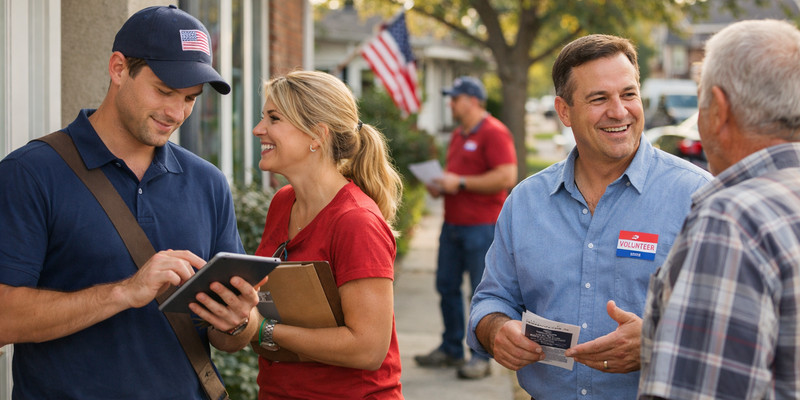
Grassroots movements have long been the backbone of successful conservative campaigns. Built on community engagement, volunteer energy, and local advocacy, these efforts drive turnout and shape narratives from the ground up. Today, artificial intelligence is enhancing—not replacing—this foundation by giving grassroots operations the tools to scale with precision and efficiency.
AI is not removing the human element. It is amplifying it.
Scaling Without Losing the Local Touch
One of the biggest challenges for grassroots campaigns has always been scale. Personal outreach is effective, but it is also time-consuming and resource-intensive. AI helps bridge that gap by automating repetitive tasks while preserving message relevance.
Campaigns can now use AI tools to segment voter lists, prioritize outreach, and personalize communication at a level that would be impossible manually. Volunteers can focus on meaningful conversations, while AI handles the data organization behind the scenes.
This balance allows campaigns to grow without sacrificing authenticity.
Smarter Voter Identification
AI-driven models can analyze voter behavior, past turnout, and engagement patterns to identify high-priority individuals for outreach. Instead of casting a wide net, grassroots teams can focus their efforts on voters who are most likely to be persuaded or mobilized.
This improves efficiency across the board. Volunteers spend less time on low-probability contacts and more time engaging voters who matter most.
Precision strengthens productivity.
Enhancing Volunteer Coordination
Grassroots campaigns rely heavily on volunteers, and managing those efforts can be complex. AI can streamline coordination by optimizing schedules, assigning territories, and tracking performance in real time.
For example, canvassing routes can be generated based on voter density and likelihood to engage, ensuring that time in the field is used effectively. Follow-up communications—texts, emails, or calls—can be triggered automatically based on voter interaction.
This creates a more organized, responsive operation.
Personalized Communication at Scale
AI allows campaigns to tailor messaging based on individual voter interests and behaviors. Whether through email, SMS, or digital ads, content can be adjusted to reflect specific concerns—economic issues, education, or local policies.
This level of personalization increases engagement. Voters are more likely to respond when messaging feels relevant to their priorities.
Mass communication becomes individualized outreach.
Real-Time Feedback and Adaptation
Grassroots campaigns often operate in fast-moving environments where conditions can change quickly. AI-powered analytics provide immediate feedback on what is working and what is not.
If a particular message resonates in one area, campaigns can expand its use. If engagement drops, adjustments can be made in real time. This adaptability ensures that grassroots efforts remain aligned with voter sentiment.
Campaigns are no longer guessing. They are responding.
Strengthening Fundraising Efforts
AI also plays a role in grassroots fundraising. By analyzing donor behavior, campaigns can identify patterns—who gives, how often, and through which channels.
This allows for more targeted appeals, improving conversion rates and donor retention. Small-dollar fundraising, a cornerstone of grassroots campaigns, becomes more efficient and sustainable.
Better insights lead to better results.
Maintaining Human Connection
While AI offers powerful capabilities, its role is to support—not replace—the human connection that defines grassroots movements. Voters still value personal interaction, community presence, and authentic engagement.
AI handles the complexity behind the scenes, allowing campaigns to focus on building relationships. When used correctly, it enhances the human side of campaigning rather than diminishing it.
Technology should serve people—not the other way around.
The Strategic Advantage
Grassroots campaigns that integrate AI into their operations gain a significant edge. They can move faster, target more effectively, and adapt in real time—all while maintaining the authenticity that drives voter trust.
As political competition intensifies, the ability to combine traditional grassroots energy with modern technology will define success.
In the evolving landscape of political marketing, the strongest campaigns are not choosing between people and technology.
They are using both—strategically, efficiently, and with purpose.