The Trust Factor: Why Credibility Matters More Than Ever in Campaigns
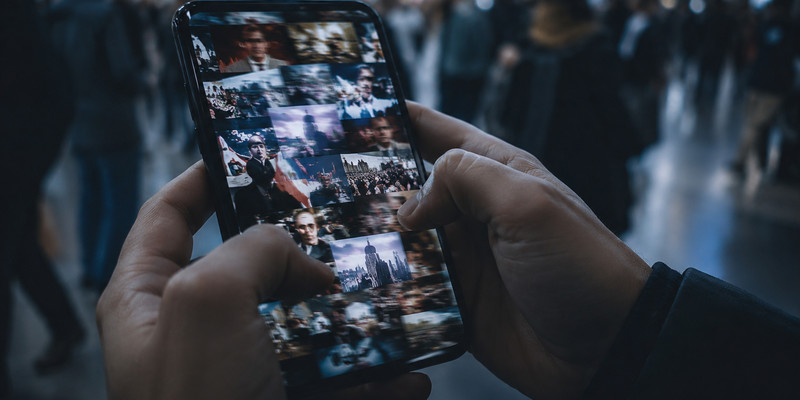
Modern political campaigns have more tools, data, and communication channels than ever before. Campaigns can target voters instantly, adjust messaging in real time, and distribute content across nearly every platform imaginable. But despite all of this technological growth, one challenge continues becoming more important: trust.
In today's digital environment, credibility is becoming one of the most valuable assets a campaign can have. Voters are constantly exposed to political messaging, algorithm-driven content, AI-generated media, and conflicting information from countless sources. As a result, audiences are becoming more skeptical about what they see online and more selective about which campaigns they believe.
Visibility alone is no longer enough. A campaign may dominate social feeds or generate millions of impressions, but if voters do not trust the message, long-term engagement becomes difficult to sustain.
A More Fragmented Information Environment
Political communication no longer flows through a few centralized outlets. Voters now consume information through social media, podcasts, livestreams, creators, messaging apps, and short-form video platforms. This has created an environment where narratives move faster, emotional content spreads more easily, and misinformation can gain traction quickly.
Campaigns benefit from being able to communicate directly with voters, but they also operate inside a system where credibility is constantly being tested. George Washington University's post-election survey of 800 U.S. adults conducted in November 2024 showed that nearly 70 percent of respondents said online misinformation and disinformation complicated their ability to access accurate election information — meaning the average voter now enters every campaign interaction with a layer of preloaded doubt that no amount of targeting precision can dissolve on its own.
That shift is changing campaign strategy. The focus is moving away from simply maximizing reach and toward maintaining consistent trust over time.
Why Consistency Matters
One of the fastest ways campaigns lose credibility is through inconsistent messaging. In digital spaces, voters often encounter campaign content across multiple platforms within the same day. If a campaign appears dramatically different depending on where voters see it, trust begins to weaken.
Consistency does not mean repeating the exact same wording everywhere. It means maintaining a recognizable voice, stable priorities, and a clear sense of identity across platforms.
Campaigns that communicate with discipline often feel more reliable to voters. Over time, that reliability becomes a competitive advantage because familiarity tends to strengthen credibility.
AI Creates Both Opportunity and Skepticism
Artificial intelligence is making campaigns more efficient in many ways. AI can help optimize outreach, analyze voter behavior, improve message timing, and automate large portions of digital communication.
At the same time, AI is also increasing voter skepticism.
Pew Research Center's survey of nearly 10,000 Americans released in September 2024 revealed that 57 percent of U.S. adults were extremely or very concerned that AI would be used to create and spread fake or misleading information about candidates — and that concern crossed party lines almost identically, with 56 percent of Republicans and 58 percent of Democrats sharing it — signaling that AI skepticism is not a partisan edge case but a baseline voter condition campaigns need to actively plan around.
This means campaigns must use AI carefully. Technology can support communication, but it cannot replace authenticity. Campaigns that rely too heavily on automation may gain efficiency while losing credibility.
Authenticity Matters More Than Perfection
One of the biggest mistakes campaigns make is believing every message must appear flawless. In reality, voters often respond better to communication that feels direct, transparent, and human.
Overly polished messaging can sometimes feel detached or insincere in digital environments where audiences are constantly exposed to curated content. Campaigns that communicate clearly and acknowledge mistakes honestly often maintain stronger long-term trust than campaigns attempting to appear perfect at all times.
Voters may not always agree with a campaign, but they are more likely to continue listening if the communication feels authentic.
Trust Is Becoming Infrastructure
Modern campaigns are beginning to recognize that trust is not simply a branding advantage — it is structural. Trust affects whether voters continue paying attention, believe messaging, engage consistently, share campaign content, and remain loyal over time. The Center for Campaign Innovation's 2024 National Post-Election Survey documented that just one in four voters opted in to receive direct communication from candidates and campaigns — meaning three-quarters of the electorate required a trusted intermediary before they would engage, a ratio that underscores why credibility isn't simply about message quality but about whether voters have decided a campaign has earned the right to reach them directly at all.
As digital communication becomes more crowded and automated, credibility will likely become even more valuable.
Technology can improve targeting and efficiency, but it cannot manufacture genuine trust. Campaigns still earn credibility through consistency, clarity, transparency, and discipline over time.
In the modern political environment, campaigns that protect trust carefully may ultimately have the strongest long-term advantage.