The Urgency Trap: How Constant Fundraising Crises Erode Donor Trust
The High Price of Constant Urgency
Open the inbox of any politically engaged conservative, and you’ll find a digital battlefield. “FINAL NOTICE,” screams one subject line. “TRIPLE-MATCH ENDS MIDNIGHT,” warns another. These tactics, driven by the relentless pressure of fundraising deadlines, are staples of modern digital campaigning. They leverage basic human psychology—scarcity, loss aversion, and social proof—to generate immediate donations. And in the short term, they often work. A looming deadline can indeed spur a supporter to finally click the donate button.
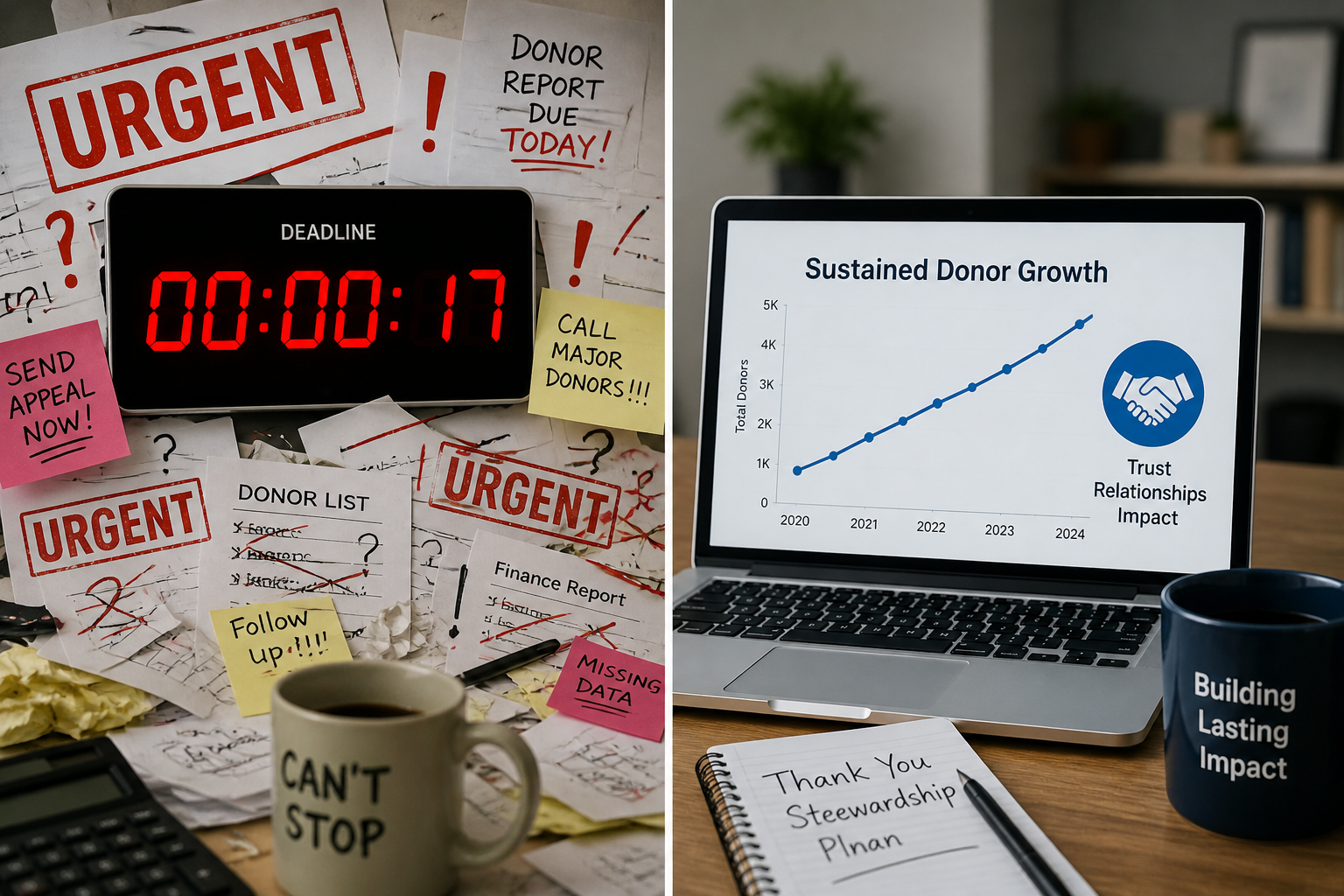
But at what cost? While these high-urgency appeals can deliver a quick revenue spike, they operate on a model of diminishing returns. By treating every fundraising email as a five-alarm fire, campaigns risk burning out their most valuable asset: donor trust. Over time, this approach doesn't just desensitize supporters; it can actively erode the credibility of the candidate and the movement they represent. The most sophisticated campaigns are realizing that sustainable fundraising isn't about manufacturing crises, but about building partnerships.
Understanding the Donor Fatigue Cycle
The perpetual cycle of manufactured urgency creates a predictable pattern of donor behavior. Initially, a compelling match or a firm deadline motivates action. But when a “once-in-a-lifetime” triple-match is followed by another one a week later, supporters learn to tune out the noise. This leads to several negative outcomes:
- List Burnout: Open rates and click-through rates decline as subscribers become desensitized. A list that once responded enthusiastically becomes sluggish, forcing campaigns to spend more on acquisition to replace fatigued donors.
- Brand Damage: A campaign that constantly appears desperate or on the verge of collapse projects weakness, not strength. This tone can undermine the candidate's core message of leadership and stability. Voters and donors want to back a winner, not a perpetual victim of circumstance.
- Erosion of Credibility: Trust is the currency of politics. When a campaign repeatedly cries wolf with “final” notices and “last chance” offers, its word becomes meaningless. This transactional relationship replaces a mission-driven partnership, making it harder to mobilize supporters for non-monetary actions like volunteering or get-out-the-vote efforts.
Data from the nonprofit sector consistently shows that donor retention is a major challenge. According to the Fundraising Effectiveness Project, the average donor retention rate often hovers below 50% [VERIFY]. While political campaigns operate on a different cycle, the underlying principle is the same: it is far more cost-effective to retain a loyal donor than to acquire a new one. The constant-crisis model is fundamentally at odds with long-term retention.
A Sustainable Framework: Fundraising Built on Trust and Mission
Shifting away from the urgency trap doesn't mean abandoning deadlines or incentives. It means grounding them in authenticity and balancing them with a broader communication strategy. For conservative campaigns, this approach aligns perfectly with core values of integrity, transparency, and respect for supporters' intelligence.
1. Anchor Urgency in Reality
Instead of inventing arbitrary deadlines, tie fundraising pushes to real-world campaign events and needs. This creates genuine, understandable urgency that respects the donor.
- Event-Driven Asks: “We need to raise $10,000 by Friday to fund our ad buy ahead of next week’s debate.”
- Milestone-Based Goals: “Help us hit our target of 5,000 new donors this month to show grassroots strength before the primary.”
- Responsive Messaging: “The opposition just launched a negative ad—we need to raise $25,000 in the next 48 hours to get our response on the air.”
2. Prioritize Transparency and Impact
Donors are partners in the mission, not just ATMs. Show them how their contributions are making a difference. This reinforces their decision to give and builds a foundation for future asks. Instead of just asking for money, report on what past donations have accomplished.
- Detailed Reports: Use simple infographics or short videos to show how funds were allocated (e.g., “Your support last month helped us contact 50,000 voters and place 1,000 yard signs.”).
- Tangible Goals: Frame asks around specific outcomes. “A donation of $50 funds a targeted social media ad to 10,000 undecided voters in a key district.”
3. Vary Your Communication Mix
A healthy relationship isn't purely transactional. A campaign’s email and SMS program should not be a constant stream of solicitations. Build goodwill and keep supporters engaged by providing value outside of the ask.
- Informative Updates: Send emails with policy analysis, updates from the campaign trail, or exclusive behind-the-scenes content.
- Gratitude and Recognition: A simple, sincere thank-you message with no ask attached can be one of the most powerful emails you send. Acknowledge donor loyalty and milestones.
- Engagement Asks: Ask supporters to sign a petition, share a post, or volunteer for an event. This diversifies their engagement and makes them feel like a valued part of the team.
Playing the Long Game
In the high-stakes environment of a political campaign, the temptation to pull every lever for immediate cash is immense. But the most successful, resilient campaigns are those that build a durable base of support. By moving away from a model of manufactured crisis and toward one of authentic partnership, conservative campaigns can build a fundraising program that not only meets its financial goals but also strengthens the movement. Treating donors with respect and transparency isn't just good ethics—it's winning strategy.