Where Voters Gather: The Growing Power of Virtual Town Halls
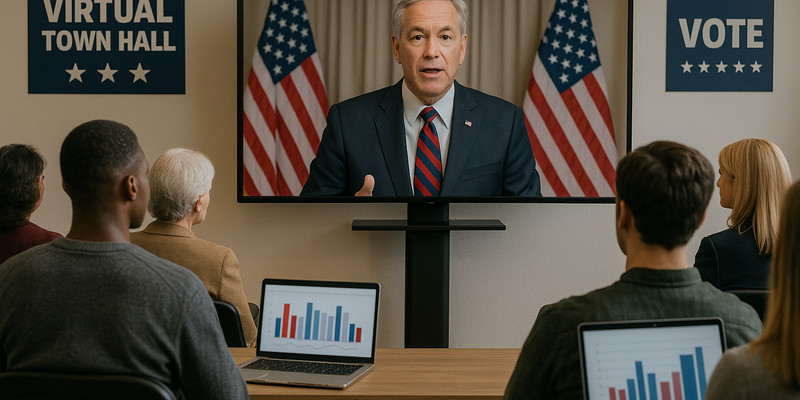
A New Public Square
The classic town hall has always been a place where voters speak their minds, shake hands with candidates, and bring their concerns directly to the people asking for their vote. But today’s voters live across schedules, screens, and responsibilities that don’t always leave room for an in-person forum. Virtual town halls don’t replace the old public square—they expand it. They pull conversations into living rooms, offices, and pockets. For conservative campaigns looking to connect authentically with voters while outmaneuvering gatekeepers, virtual town halls offer a modern revival of an old democratic tradition.
Open Access
One of the greatest strengths of virtual town halls is accessibility. Voters who would never drive across town on a Tuesday night can still attend. Parents juggling kids, seniors with mobility challenges, young voters with irregular schedules—all can participate without logistical barriers.
This inclusivity deepens engagement. It shows that a campaign values voters’ time as much as their voice. And for conservatives, who often emphasize community, responsibility, and local empowerment, offering easy access to real dialogue reinforces the core message: everyone deserves a seat at the table.
Authentic Conversation
What sets virtual town halls apart from pre-recorded videos or polished campaign speeches is the unpredictability. Real questions. Real people. Real reactions. The format strips away the choreography and returns political communication to a direct, unscripted exchange.
Candidates can’t hide behind press conferences or filtered coverage. Instead, they speak plainly, listen harder, and answer the issues people care about most. This authenticity resonates deeply with voters who are tired of political theater and want transparency from those seeking public trust.
Interactive Energy
Virtual town halls create immediate connections. Voters aren’t just passive viewers—they’re participants. They submit questions, react in real time, and share their experiences with others tuned in. Even through a screen, the energy of collective participation feels tangible.
For conservative campaigns, this interaction becomes a rallying force. It unites people across neighborhoods, counties, and entire states. When a voter sees others echoing their concerns—about education, cost of living, security, or community—they feel part of a larger movement.
Message Precision
Every question in a virtual forum is a data point. Campaigns quickly learn what concerns rise to the surface and which issues voters want addressed immediately. Over time, the pattern becomes clear: what topics need emphasis, what explanations require clarity, and what messages resonate most strongly.
This keeps campaigns grounded. Instead of guessing what matters, or relying solely on consultants, candidates hear it directly from the voters they aim to represent.
Humanizing the Candidate
Virtual town halls create moments that humanize candidates in ways traditional speeches never could. A laugh. A shared story. A calm explanation during a tough question. These small, sincere moments build trust.
Voters want leaders who feel approachable—leaders who remember what it means to listen. Virtual town halls let candidates reveal their personality, their values, and their leadership style. For conservatives especially, where character and authenticity carry enormous weight, this format strengthens the bond between candidate and community.
Reach and Flexibility
Because virtual town halls aren’t tied to physical spaces, campaigns can host more of them, more often, and for more specific groups. A candidate can hold one event for small-business owners, another for veterans, another for parents concerned about school curriculum—all in the same week.
This flexibility multiplies a campaign’s impact. It allows outreach that is targeted, relevant, and responsive to voter priorities.
A Stronger Connection
What makes virtual town halls powerful isn’t the technology—it’s the connection. They bring the democratic process to people where they live, work, and think. They rebuild a sense of community engagement that modern life sometimes dissolves.
For conservative campaigns committed to listening, leading, and building trust across diverse communities, virtual town halls provide a bridge between tradition and innovation. They revive the spirit of face-to-face conversation, powered by tools that match the pace of modern life.
The voters are already gathering online. The campaigns that join them there—with sincerity, openness, and respect—will be the ones that earn their confidence.