Winning the Digital Airwaves: A Guide to Political Ad Intelligence
Why Passive Ad Watching Is No Longer Enough
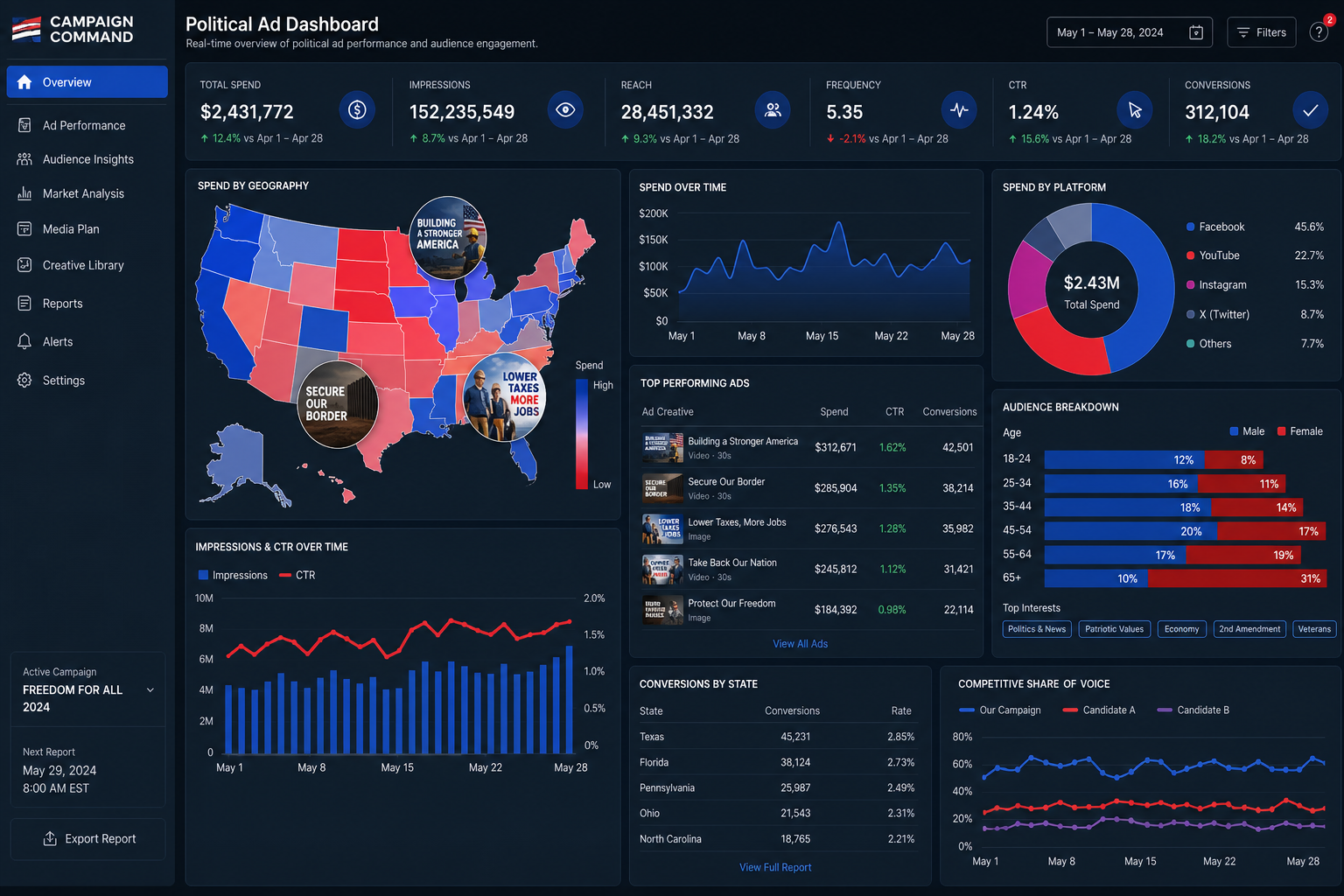
In modern political warfare, the digital ad space is a primary battleground where narratives are shaped and voters are won. For years, campaigns have kept an eye on their opponent’s television spots, but simply watching what the other side is doing is a reactive, defensive posture. A disciplined approach to competitive ad intelligence—systematically monitoring, analyzing, and acting on an opponent’s digital advertising strategy—is now a non-negotiable component of any serious campaign. It provides a real-time view into their messaging priorities, target audiences, and resource allocation, giving your team the crucial insights needed to stay on offense.
This isn't just about opposition research; it's about battlefield awareness. Knowing what messages your opponent is testing in specific markets allows you to pre-bunk attacks, identify strategic weaknesses, and allocate your own budget with greater precision. For conservative campaigns navigating a crowded and often biased media landscape, mastering this discipline is essential for ensuring your message cuts through the noise and connects with voters effectively.
The Modern Toolkit: Where to Find the Data
Fortunately, transparency requirements have made much of this intelligence publicly available. While sophisticated campaigns often use paid third-party services for deeper analysis, the foundational work can be done using free, platform-provided tools. Your team should be living in these dashboards daily.
- Meta Ad Library: The most comprehensive tool for tracking ads across Facebook and Instagram. It provides data on ad creatives, spending ranges, impressions, and basic demographic targeting (age, gender, location). You can search by candidate, PAC, or keyword to see exactly what ads are running, who is seeing them, and how much is being spent.
- Google Political Advertising Transparency Report: This is your window into ads running on Google Search, YouTube, and Google’s partner networks. Given YouTube’s dominance as a video platform, this tool is critical for monitoring an opponent’s video messaging and persuasion efforts. It offers similar insights into creative, spend, and targeting.
- Snapchat Political Ads Library: While often overlooked, Snapchat is a key channel for reaching younger demographics. Monitoring this library can reveal an opponent’s strategy for engaging Gen Z and Millennial voters—an area where conservatives must compete more effectively.
The Three Pillars of Ad Intelligence: What to Analyze
Collecting the data is just the first step. The real value comes from systematic analysis across three key pillars. You should be tracking this information in a shared document or platform to identify trends over time.
1. Messaging and Creative
Go beyond simply watching the ads. Dissect them. What are the core themes? Are they focused on policy, biography, or attacks? What specific language, images, and emotional appeals are they using? Look for patterns. Are they running aspirational ads in one part of the state and fear-based attack ads in another? This reveals their core strategy and which voter segments they believe are persuadable with which arguments.
2. Targeting and Audience
The demographic and geographic data provided in the ad libraries is a roadmap to your opponent’s perceived path to victory. Are they pouring money into reaching suburban women, union households, or rural men? This tells you which voter groups they consider their base, which they see as persuadable, and—most importantly—which groups they might be ignoring. An opponent heavily focused on urban centers may be leaving an opening for your campaign to consolidate support in exurban and rural communities.
3. Spending and Cadence
Money follows priorities. A sudden spike in spending behind a specific ad or in a particular media market is a powerful signal. Track their daily and weekly spending to understand their budget allocation and timing. Are they spending heavily early to define the race, or are they conserving resources for a final push? Monitoring their spending cadence helps you anticipate their major campaign pushes and make more informed decisions about when and where to deploy your own advertising budget for maximum impact.
From Intelligence to Action: Winning the Campaign
Data that sits in a spreadsheet is worthless. The goal of competitive intelligence is to inform and sharpen your campaign’s strategy. Here’s how to put your analysis into action:
- Develop Rapid Counter-Messaging: When you see an opponent testing a new line of attack in a small market, you have a critical head start to develop a response. You can prepare your own ads, press releases, and talking points to counter the narrative before it reaches a wider audience.
- Exploit Strategic Gaps: If your analysis shows the opposition is ignoring a key issue or demographic, that’s your opportunity. Craft ads that speak directly to those voters and own that issue space before they realize their mistake.
- Refine Your Own Creative: Analyze their top-performing ads (those with the highest spending and longest run times). What makes them effective? Is it the format (e.g., short-form video), the messenger, or the call to action? You should never copy your opponent, but you can learn from their successes and failures to make your own creative more compelling.
- Optimize Budget Allocation: If an opponent is massively outspending you in a specific market, it may be more efficient to shift resources to a different area where your dollars can go further. Ad intelligence allows you to make data-driven decisions rather than guessing where to compete.
For conservative campaigns, this process provides a vital check against the narratives pushed by mainstream media. By monitoring an opponent’s paid messaging directly, you can bypass the media filter, understand their real priorities, and ensure your campaign is fighting the actual battle for voters' hearts and minds—not the one invented by pundits. A disciplined ad intelligence program turns reactive defense into proactive, data-driven offense, providing a critical edge in a competitive political environment.