Winning the Inbox: The New Rules for Conservative Email Marketing
From Broadcast to Connection: The Evolution of Campaign Email
For over a decade, political strategists have periodically declared the death of email. Yet, year after year, the humble inbox remains the financial engine of modern campaigns and the most reliable channel for direct voter communication. While social media platforms grapple with algorithmic censorship and fluctuating reach, email provides a direct, owned line to your supporters. However, the tactics that worked in previous cycles are now actively working against campaigns, leading to list burnout, plummeting open rates, and missed opportunities.
The era of the one-size-fits-all “batch and blast” email is over. Today, winning the inbox requires a sophisticated, data-driven approach centered on personalization, value, and trust. For conservative campaigns aiming to cut through mainstream media noise and build a resilient grassroots army, mastering the new rules of email marketing isn’t just an option—it’s a necessity. According to industry reports from groups like Litmus, email marketing consistently delivers the highest return on investment of any digital channel, with some studies showing an average return of over $35 for every $1 spent. [VERIFY] For political campaigns, that translates directly into donations, volunteer sign-ups, and votes.
Segmentation: Treating Supporters as Individuals, Not a Monolith
The single greatest failure of outdated email programs is treating every subscriber identically. A first-time donor who gave $25 after a specific policy announcement has a different motivation than a long-time volunteer who has attended multiple rallies. Sending them the same generic fundraising plea is inefficient and disrespectful.
Modern email strategy begins with hyper-segmentation. By dividing your list into smaller, targeted groups based on data, you can tailor your messaging for maximum relevance and impact. This approach aligns perfectly with the conservative principle of recognizing and respecting the individual.
Key Segments for Every Campaign:
- Donation History: Segment by first-time donors, recurring givers, high-dollar contributors, and lapsed donors. A message to re-engage a lapsed donor should be fundamentally different from one thanking a new supporter.
- Engagement Level: Create segments for your most active subscribers (those who always open and click) and your least active ones. Target the latter with a specific re-engagement campaign before removing them to protect your deliverability.
- Source of Acquisition: How did they join your list? Was it a petition on Second Amendment rights, a signup form at a rally, or a lead ad about economic policy? Speak to them about the issues they’ve already indicated are important.
- Geographic Location: Beyond targeting by state or congressional district, use location data to send event invitations, localized policy updates, and get-out-the-vote (GOTV) reminders that are geographically relevant.
Beyond the Ask: A Content Strategy That Builds Community
If every email you send is a fundraising appeal, your supporters will quickly tune you out. An effective email program balances fundraising asks with content that provides genuine value, reinforcing their decision to support your cause. This strategy builds a loyal community that is more receptive when you do need to ask for financial support.
Value-Driven Content Ideas:
- Exclusive Policy Briefings: Offer your subscribers a deeper dive into a policy proposal before it’s released to the general public.
- Behind-the-Scenes Updates: Share photos and short stories from the campaign trail that make supporters feel like insiders.
- Candidate Q&As: Send emails from the candidate that directly answer questions submitted by supporters, fostering a sense of two-way communication.
- Impact Reports: Show donors how their contributions are being used with transparent updates on ad buys, voter outreach efforts, and campaign milestones.
- Surveys and Polls: Ask for your subscribers' opinions on key issues. This not only provides valuable data for your campaign but also makes supporters feel heard and valued.
The Technical Imperative: Deliverability and Data Integrity
A brilliantly crafted email is useless if it lands in the spam folder. In 2024, email providers like Google and Yahoo implemented stricter sender requirements, making deliverability a critical technical hurdle. Campaigns that ignore these rules will see their messages blocked entirely.
Essential Technical Best Practices:
- Authentication: Ensure your domain is properly authenticated with SPF, DKIM, and DMARC records. This is a non-negotiable step that proves to email providers that you are a legitimate sender.
- List Hygiene: Regularly remove inactive or invalid email addresses from your list. Sending to a clean list signals to providers that you are a responsible sender and boosts your overall deliverability.
- Monitor Your Reputation: Use tools like Google Postmaster to monitor your sender reputation, spam complaint rates, and domain health.
Alongside deliverability, a commitment to data privacy is paramount. Be transparent about how you collect and use subscriber data. Building trust is essential for long-term engagement, and this aligns with conservative values of accountability and personal responsibility.
The Next Frontier: AI, Automation, and Integrated Strategy
The future of email marketing lies in smart automation and integration with other campaign channels. Artificial intelligence is no longer a futuristic concept; it's a practical tool for optimizing your program.
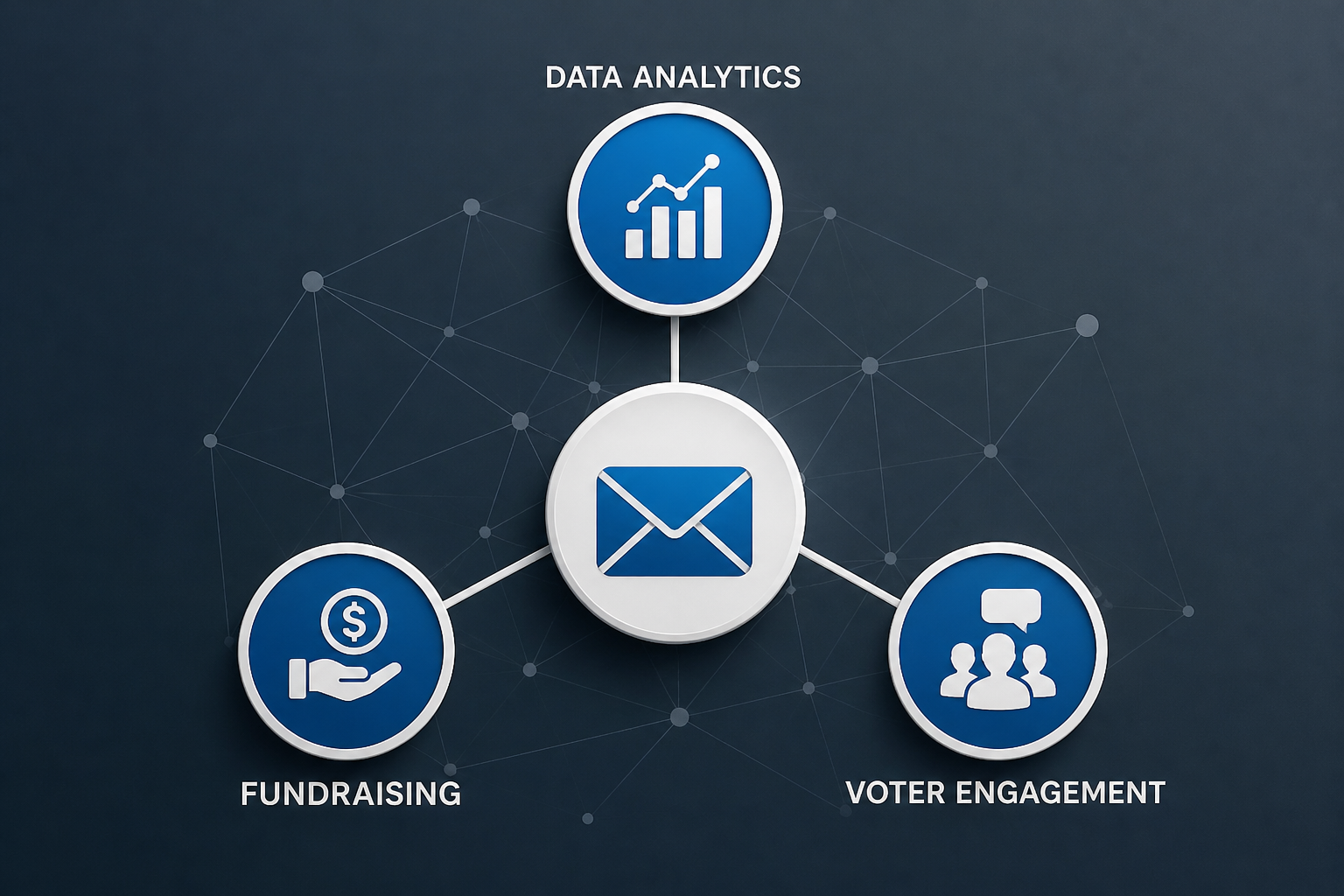
AI can help draft subject lines, determine the optimal send time for individual subscribers, and even generate personalized content based on a user's past behavior. Automation allows you to create sophisticated email sequences, such as a multi-part welcome series for new subscribers or a journey designed to convert a petition signer into a first-time donor. Finally, your email strategy must be integrated with your SMS, social media, and advertising efforts. Data should flow seamlessly between channels, creating a cohesive and personalized experience for every voter. The campaigns that treat email as a dynamic hub for community-building—not just a static megaphone for fundraising—will be the ones who build the lasting relationships necessary to win.